
Fabric Scissors: Professional Sewing Shears for Precision Cutting
Sharp Stainless Steel Scissors 8-10 Inches for Fabric, Quilting & Dressmaking
Precision fabric cutting begins with professional-grade scissors designed specifically for textile work. Unlike household scissors, quality sewing shears feature sharp hardened steel blades, ergonomic offset handles, and construction engineered for clean cuts through multiple fabric layers without fraying edges.
Whether quilting intricate patterns, cutting garment pieces, or preparing materials for craft projects, the right cutting tools transform tedious preparation into efficient process. Sharp fabric scissors deliver accuracy essential for pieces that fit together perfectly while reducing hand fatigue during extended cutting sessions.
Why Fabric Scissors Matter for Sewing
Specialized sewing scissors provide advantages impossible with general-purpose cutting tools. The precision-ground blades slice cleanly through textile fibers without pushing fabric forward or creating ragged edges that compromise seam quality.
Quality fabric shears feature longer blades (7-10 inches) enabling smooth continuous cuts essential for pattern work. The lower blade design allows flat positioning against cutting surfaces while upper blades perform actual cutting action.
Professional Construction Benefits
Hardened steel or carbon steel blades maintain sharp edges through countless cutting sessions. This durability proves crucial when cutting quilting cotton, garment fabrics, or specialty textiles requiring clean accurate edges.
Offset handle design elevates hands above work surfaces, reducing wrist strain during marathon cutting sessions. This ergonomic advantage becomes especially valuable when preparing large projects or cutting multiple pattern pieces. Explore our sewing supplies for complete equipment.
Cutting Precision and Control
The balanced weight of quality scissors provides natural cutting momentum while maintaining precise control. This combination allows accurate following of pattern lines and measurement marks without deviation.
Sharp blades cut through 2-4 fabric layers simultaneously without distortion. This multi-layer capability saves considerable preparation time during quilting or production sewing. Pair with rotary cutters and mats for comprehensive cutting solutions.
Professional Heavy-Duty Fabric Scissors 9.5 Inch
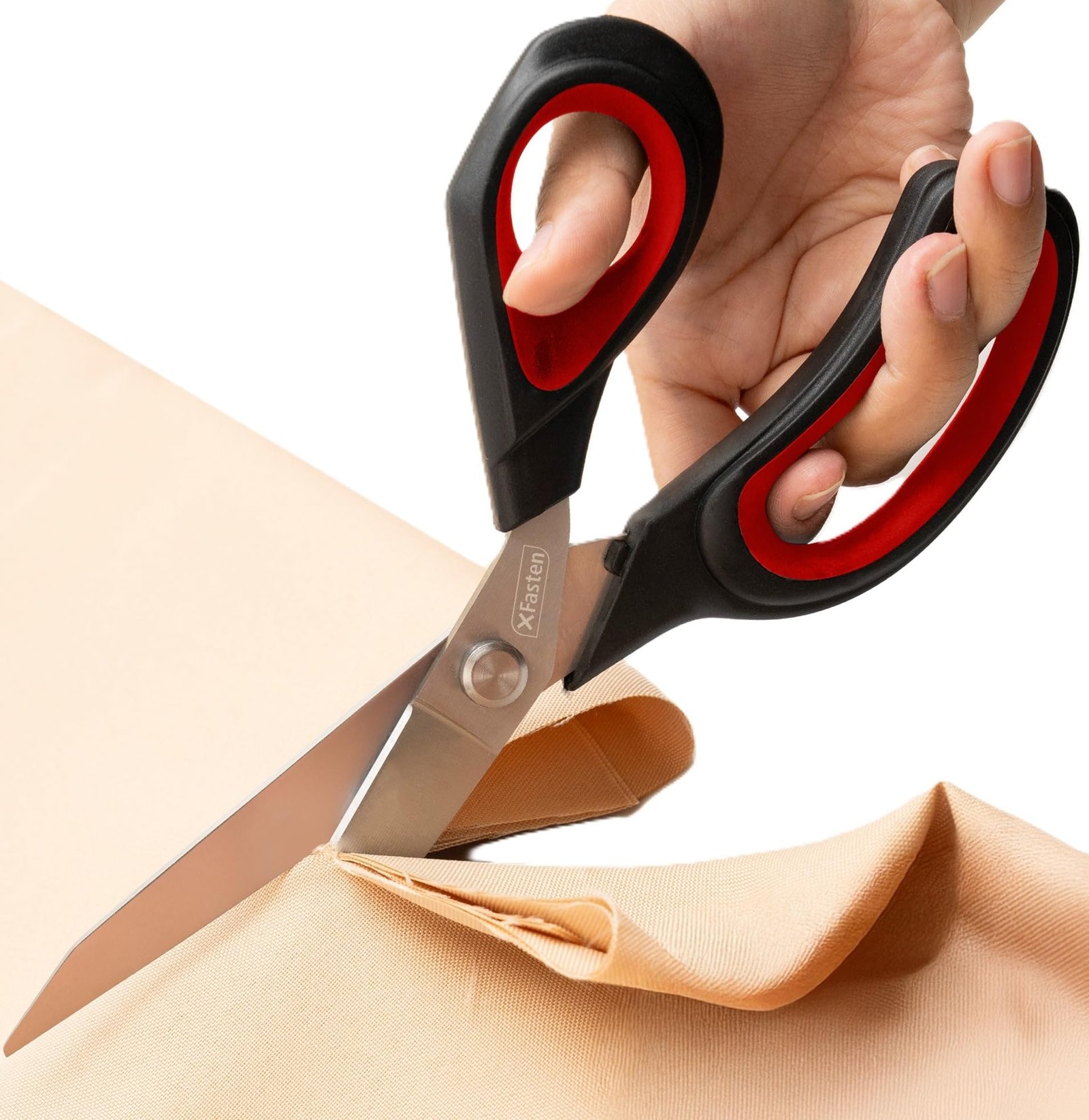
Premium tailor scissors featuring titanium-coated forged stainless steel blades engineered for demanding sewing and quilting applications. The comfortable grip handles reduce fatigue while superior blade hardness delivers clean cuts through multiple fabric layers including heavyweight materials.
- 9.5 inch forged stainless steel construction – 3x harder than standard steel
- Titanium coating provides rust resistance and extended edge retention
- Cuts cleanly through 16+ fabric layers without effort
- Ergonomic comfort grip handles reduce hand strain
- Ideal for sewing, quilting, dressmaking, and pattern cutting
- Multi-purpose design handles leather and heavy-duty materials
- Professional-grade sharpness for home and studio use
Complete Sewing Scissors Set with Accessories
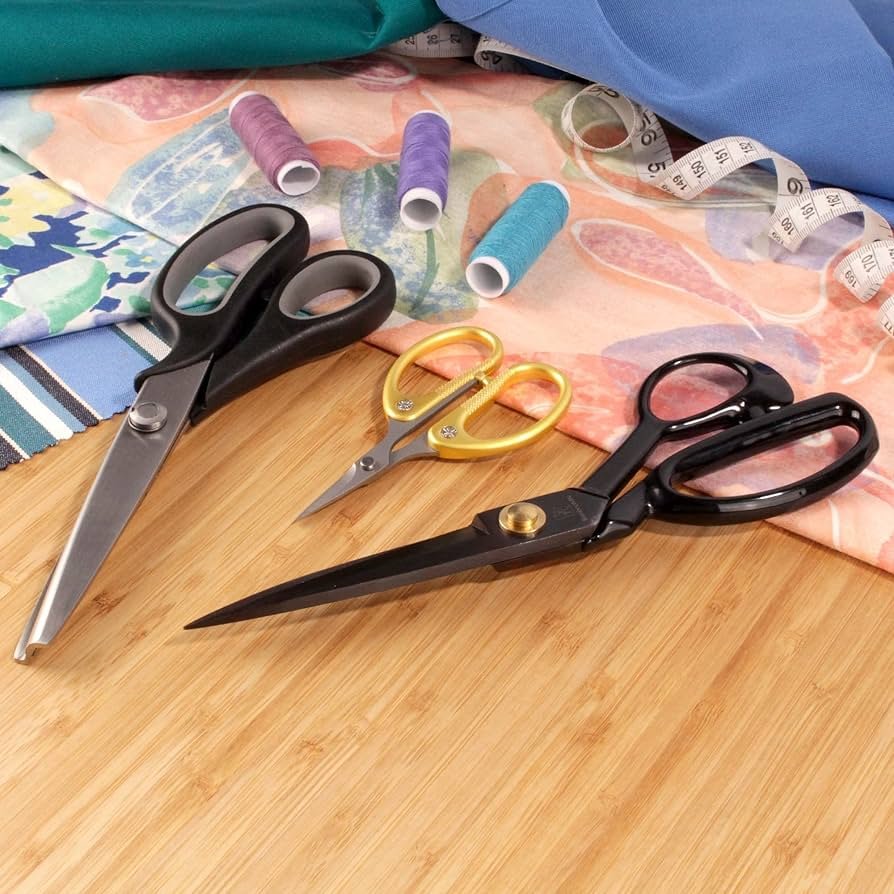
Comprehensive cutting tool collection featuring professional 9.5-inch tailor scissors, precision embroidery scissors, thread snips, and essential sewing accessories. This complete kit provides every cutting tool needed for successful sewing projects from initial fabric preparation through final finishing details.
- 9.5″ professional tailor scissors for main fabric cutting
- 5″ embroidery scissors for detailed precision work
- 4.5″ thread snips for quick trimming during sewing
- 10 color sewing thread spools for various projects
- Seam ripper, 12 needles, and spare buttons
- 60″ measuring tape for accurate measurements
- Needle threader, pins, and storage case
Types of Fabric Scissors
Different scissors serve specific cutting needs within sewing and quilting workflows. Understanding these variations helps build efficient cutting tool collections.
Dressmaker Shears (8-10 inches)
The versatile workhorses of sewing rooms, dressmaker shears handle most cutting tasks from pattern pieces to fabric preparation. The 8-inch size offers excellent balance between cutting capacity and maneuverability.
Longer 9-10 inch versions excel at cutting through multiple layers or heavyweight fabrics. The extended blade length enables smooth continuous cuts reducing the need for repositioning during long cuts.
Embroidery and Detail Scissors (4-6 inches)
Smaller precision scissors navigate tight curves, clip seam allowances, and handle intricate cutting tasks where full-size shears prove unwieldy. The fine sharp points reach into corners without damaging surrounding fabric.
These essential tools complement larger scissors rather than replacing them. Most sewists maintain both sizes for comprehensive cutting capability. Check our quilting tools for specialized options.
Thread Snips and Clippers
Spring-action thread snips provide quick trimming during sewing without reaching for full scissors. The compact size keeps them near sewing machines for convenient access during construction.
These specialized tools preserve main fabric scissors from thread-cutting wear while offering superior efficiency for frequent trimming tasks throughout project assembly.
Pro Tip: Reserve fabric scissors exclusively for textiles. Paper, cardboard, and other materials contain abrasive minerals that quickly dull precision cutting edges, compromising performance on fabric.
Blade Materials and Construction
The steel composition and manufacturing process determine cutting performance, edge retention, and overall scissor longevity. Premium materials justify higher costs through superior functionality and extended lifespan.
High-Carbon Steel Blades
Carbon steel provides exceptional hardness and edge retention surpassing standard stainless options. These blades hold sharp edges through extensive use while cutting cleanly through challenging fabrics.
The increased hardness allows finer edge angles that slice through delicate materials without snagging. Professional tailors and serious quilters often prefer carbon steel for its cutting superiority.
Stainless Steel Options
Stainless steel offers rust resistance and low maintenance appealing to home sewers. Modern hardening processes create stainless blades approaching carbon steel performance while eliminating corrosion concerns.
Quality stainless scissors feature forged construction rather than stamped blades. Forging creates denser steel with superior strength and cutting capability compared to stamped alternatives.
Specialty Coatings
Titanium coatings enhance blade hardness while providing rust protection. These treated surfaces resist adhesives and maintain sharpness longer than uncoated alternatives.
Some manufacturers apply non-stick coatings reducing friction during cutting. This proves particularly valuable when working with synthetic fabrics or materials containing sizing.
Proper Cutting Technique
Effective scissor technique maximizes cutting accuracy while minimizing hand fatigue. Proper form develops quickly but significantly improves results and comfort.
Hand Position and Grip
Insert thumb fully into the smaller handle loop while remaining fingers occupy the larger loop. This positioning provides control without excessive gripping that causes fatigue.
Maintain relaxed hand position allowing scissor weight to assist cutting action. Excessive tension reduces control and accelerates hand tiredness during extended sessions.
Cutting Motion
Use long smooth strokes utilizing full blade length from pivot to tip. This technique creates continuous clean cuts without stopping points that can show in finished edges.
Keep lower blade flat against cutting surface while upper blade performs cutting action. This positioning ensures accuracy and reduces fabric shifting during cuts. Use quality cutting mats for optimal results.
Fabric Handling
Support fabric ahead of scissors preventing pulling that distorts cutting lines. For curved cuts, rotate fabric rather than twisting scissors to maintain natural hand position.
When cutting multiple layers, ensure fabrics remain aligned throughout cutting process. Pattern weights or clips hold layers together preventing shifting that creates uneven pieces.
Sharpening and Maintenance
Regular maintenance preserves cutting performance and extends scissor lifespan significantly. Simple care routines protect precision edges between professional sharpening services.
Home Sharpening Methods
Aluminum foil technique provides quick edge touch-ups for minor dulling. Fold foil into thick pad and make 10-15 cutting strokes through the layers to smooth blade edges.
Fine sandpaper (220 grit or higher) addresses slightly more significant dulling. Make several cuts through sandpaper then test on fabric scraps to assess improvement.
Professional Sharpening
Annual professional sharpening maintains optimal performance for frequently used scissors. Specialists restore precision grinding angles impossible to achieve with home methods.
Premium scissors costing $50+ deserve professional service ensuring proper edge angles and blade alignment. Many fabric stores offer sharpening services or can recommend qualified specialists.
Cleaning and Lubrication
Wipe blades after each use removing lint and fabric debris. For deeper cleaning, use rubbing alcohol on soft cloth removing residue from adhesives or fabric treatments.
Apply light sewing machine oil to pivot points every few months. This lubrication maintains smooth action while preventing rust formation in joint mechanisms. Combine with proper measuring tools for complete accuracy.
Storage and Protection
Proper storage prevents damage and maintains cutting performance between uses. Simple protection extends scissor functionality while preventing accidents.
Protective Storage Options
Blade sheaths or cases protect cutting edges from contact with other tools. Many quality scissors include protective covers that slip over closed blades.
Magnetic wall strips provide visible accessible storage while keeping blades protected from drawer contact. Position scissors with handles toward edge for safe convenient retrieval.
Environmental Considerations
Store scissors in dry climate-controlled spaces away from humidity that encourages rust. Basement or garage storage risks moisture damage even on stainless steel blades.
For humid environments, include silica gel packets in storage containers absorbing excess moisture. Light oil coating provides additional protection for long-term storage.
Organization Systems
Dedicated scissor blocks or stands keep multiple scissors organized and accessible. These systems prevent blade contact that can dull edges or cause damage.
Color-coded handles or labels identify specific scissors’ purposes preventing misuse. This organization proves especially valuable in shared sewing spaces or teaching environments.
Left-Handed Scissors Options
True left-handed fabric scissors reverse blade orientation allowing left-handed sewers to see cutting lines clearly and achieve clean cuts. These specialized tools prove essential rather than luxury for left-handed crafters.
Design Differences
Left-handed scissors place the left blade on top enabling natural viewing angles for left-handed users. This configuration ensures blade squeeze action during cutting rather than blade separation that occurs when lefties use right-handed scissors.
The handles reverse ergonomically accommodating left-hand grip patterns. This proper fit reduces fatigue and improves control compared to forcing right-handed tools.
Performance Benefits
Properly designed left-handed scissors cut cleanly without pushing fabric apart. Right-handed scissors used by left-handed sewers create ineffective cutting action compromising edge quality.
Major manufacturers offer left-handed versions of popular models. While sometimes carrying slight price premiums, the cutting performance justifies additional cost for left-handed sewists.
Scissors for Different Fabrics
Fabric characteristics influence appropriate scissor selection. Understanding these relationships optimizes cutting results across varied material types.
Delicate and Lightweight Fabrics
Silk, chiffon, and other delicate materials require extremely sharp blades that slice without snagging. Premium scissors with finer edge angles handle these challenging fabrics without pulling or distortion.
Lighter weight scissors often work better on delicate materials where heavy tools can stretch or damage fragile fibers. Test cutting techniques on scraps before cutting final pattern pieces.
Medium-Weight Cotton and Blends
Quilting cotton and similar fabrics work well with standard dressmaker shears. These versatile materials tolerate various cutting approaches from careful detail work to efficient multi-layer cutting.
Most 8-9 inch fabric scissors handle quilting cotton excellently. The blade length accommodates fabric width while maintaining maneuverability for pattern cutting. Browse our fabric collection for material options.
Heavy-Duty Materials
Denim, canvas, and upholstery fabrics require heavy-duty scissors with stronger blade construction. Standard fabric scissors struggle with these dense materials potentially suffering damage from excessive force.
Consider dedicated heavy-duty shears or rotary cutting systems for frequent heavy fabric work. These specialized tools handle resistant materials without compromising regular fabric scissors.
Frequently Asked Questions
Beginners should start with 8-inch dressmaker shears offering excellent versatility for most sewing projects. This size provides sufficient blade length for smooth cutting while remaining manageable for those developing proper technique. Quality entry-level options from reputable manufacturers cost $20-30 and serve reliably for years with proper care and exclusive fabric use.
Sharpen fabric scissors professionally once annually with regular home use, or when noticing increased cutting effort or ragged fabric edges. Home touch-up methods like aluminum foil technique work well for maintenance between professional services. Premium scissors maintain edges longer but all scissors eventually require sharpening regardless of quality level.
Never use fabric scissors on paper as mineral fillers in paper act like sandpaper against precision blade edges, creating microscopic nicks that snag fabric. Keep dedicated paper scissors for pattern cutting and household tasks. This strict separation preserves fabric scissors’ cutting performance and extends their functional lifespan significantly.
Fabric scissors feature longer blades (7-10 inches), harder steel for sharper edges, and offset handles allowing lower blades to rest flat on cutting surfaces. Regular scissors use shorter symmetrical blades and softer steel that dulls quickly on fabric. The specialized design of fabric scissors enables clean cuts through multiple fabric layers without fraying or distortion.
Store scissors in dry environments away from humidity, clean and dry blades after each use, and apply light sewing machine oil periodically to prevent rust. For humid climates, include silica gel packets in storage areas and consider applying thin oil coating for long-term storage. Stainless steel scissors resist rust better than carbon steel but still benefit from proper storage.
Quality fabric scissors justify higher costs through superior cutting performance, extended lifespan, and reduced hand fatigue. Premium scissors costing $40-80 can last decades with proper care, while budget scissors often require replacement every 1-3 years. The precision cutting quality directly affects finished project appearance, making quality scissors valuable investments for serious sewers.
Quality fabric scissors cut cleanly through 2-4 layers of quilting cotton, while heavy-duty models handle 6-8 layers depending on blade sharpness and fabric thickness. Always ensure blades remain sharp for multi-layer cutting and use proper technique with full-length cutting strokes. For more than 8 layers, consider rotary cutters designed for heavy-duty cutting applications.
Related Resources
- Sewing Supplies – Complete sewing tools and equipment
- Rotary Cutters & Mats – Alternative cutting systems
- Cutting Mats – Self-healing surfaces for precision
- Quilting Tools – Essential quilting equipment
- Fabric Collection – Materials for cutting projects
- Measuring Tapes – Accurate measurement tools
- Fabric Marking Tools – Pattern marking supplies
- Fabric Pencils – Precision marking
- Large Cutting Boards – Spacious cutting surfaces
- Cutting Rollers – Rotary cutting options
- Cutting Wheels – Specialty cutting tools
- Craft Supplies – General crafting materials
- Return to Homepage
Invest in Quality Cutting Tools
Professional fabric scissors transform cutting from laborious task to efficient process through sharp blades, ergonomic design, and construction engineered specifically for textile work. The precision these specialized tools provide directly impacts finished project quality and sewing enjoyment.
Choose scissors appropriate for typical projects considering blade length, material quality, and handle comfort. Maintain cutting performance through exclusive fabric use, regular cleaning, and periodic professional sharpening when needed.
Ready to experience the difference quality cutting tools make in your sewing projects? Explore our selection of professional fabric scissors and discover how the right shears elevate every aspect of your creative work.