
Fabric Cutting Wheel: Complete Guide to Rotary Cutters for Sewing and Quilting Projects
Professional Rotary Cutting Tools, Blades, and Techniques for Precise Fabric Cutting
Fabric cutting wheels transform textile crafting by delivering clean, precise cuts through multiple fabric layers without the hand fatigue and jagged edges that traditional scissors produce. These rotary cutting tools feature circular blades that rotate as you guide them along fabric, creating straight lines and smooth curves with professional accuracy.
Understanding how cutting wheels work and selecting the right blade size ensures efficient fabric preparation for quilting, garment construction, and craft projects. The combination of sharp rotary blades, proper cutting mats, and correct technique enables faster project completion while maintaining the precision essential for professional results.
What Makes Fabric Cutting Wheels Essential
Fabric cutting wheels revolutionized textile crafting when introduced in the late 1970s, replacing scissors as the primary cutting tool for many applications. The circular blade rotates as you push the tool forward, slicing cleanly through fabric fibers without the lifting and repositioning required by traditional scissors.
These specialized tools excel at cutting straight lines with remarkable accuracy while reducing physical strain during extended cutting sessions. The continuous cutting motion maintains fabric grain alignment perfectly, preventing the distortion that occurs when scissors compress and shift material layers during cutting.
Key Advantages Over Scissors
Rotary cutters slice through multiple fabric layers simultaneously, saving significant time when cutting duplicate pieces for quilts or garments. The rolling action distributes pressure evenly across the blade, requiring less hand strength than scissors while producing cleaner edges that maintain the integrity of fabric weave.
Working with rulers and templates becomes dramatically more accurate with rotary cutters since you never lift the fabric during cutting. This precision proves especially valuable for quilting where exact measurements determine whether blocks fit together properly without gaps or puckering.
Understanding Blade Sizes and Applications
Rotary cutter blades come in standard diameters including 28mm, 45mm, and 60mm, each designed for specific cutting tasks and material types. The 45mm blade serves as the versatile standard that balances control with cutting capacity, making it ideal for most general sewing and quilting applications.
Small Blades for Detail Work
The 28mm blade excels at cutting curves, small pattern pieces, and intricate details where maneuverability matters more than cutting power. This compact size works perfectly for appliqué preparation, trimming seam allowances, and navigating tight corners that larger blades cannot handle effectively.
Large Blades for Heavy Cutting
The 60mm blade handles thick materials and multiple fabric layers with ease, making long straight cuts through batting, denim, or layer cakes effortless. Quilters who frequently cut strip sets or work with pre-cut bundles appreciate the efficiency that larger blades provide, though they sacrifice some maneuverability for increased cutting capacity.
Fiskars 45mm Rotary Cutter with Comfort Handle
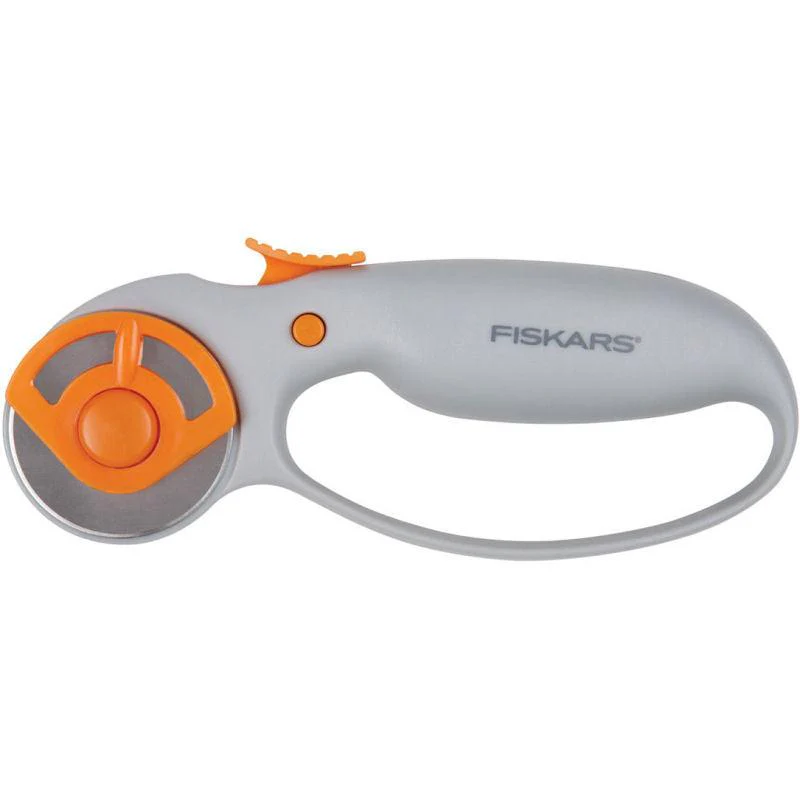
Professional-grade 45mm rotary cutter featuring premium titanium carbide blade and ergonomic comfort handle designed for cutting multiple layers of fabric, felt, vinyl, and quilting materials. This versatile sewing essential works perfectly for both right and left-handed crafters with easy blade change mechanism ensuring safe replacement without touching sharp edges. The balanced design reduces hand fatigue during extended cutting sessions while delivering clean, precise cuts through various textile weights from lightweight cotton to heavy canvas.
- 45mm titanium carbide blade
- Ergonomic comfort handle design
- Cuts multiple fabric layers
- Ambidextrous use capability
- Easy and safe blade change
- Works on fabric, felt, vinyl
- Reduces hand fatigue
- Professional-grade construction
Fiskars 60mm Heavy Duty Rotary Cutter
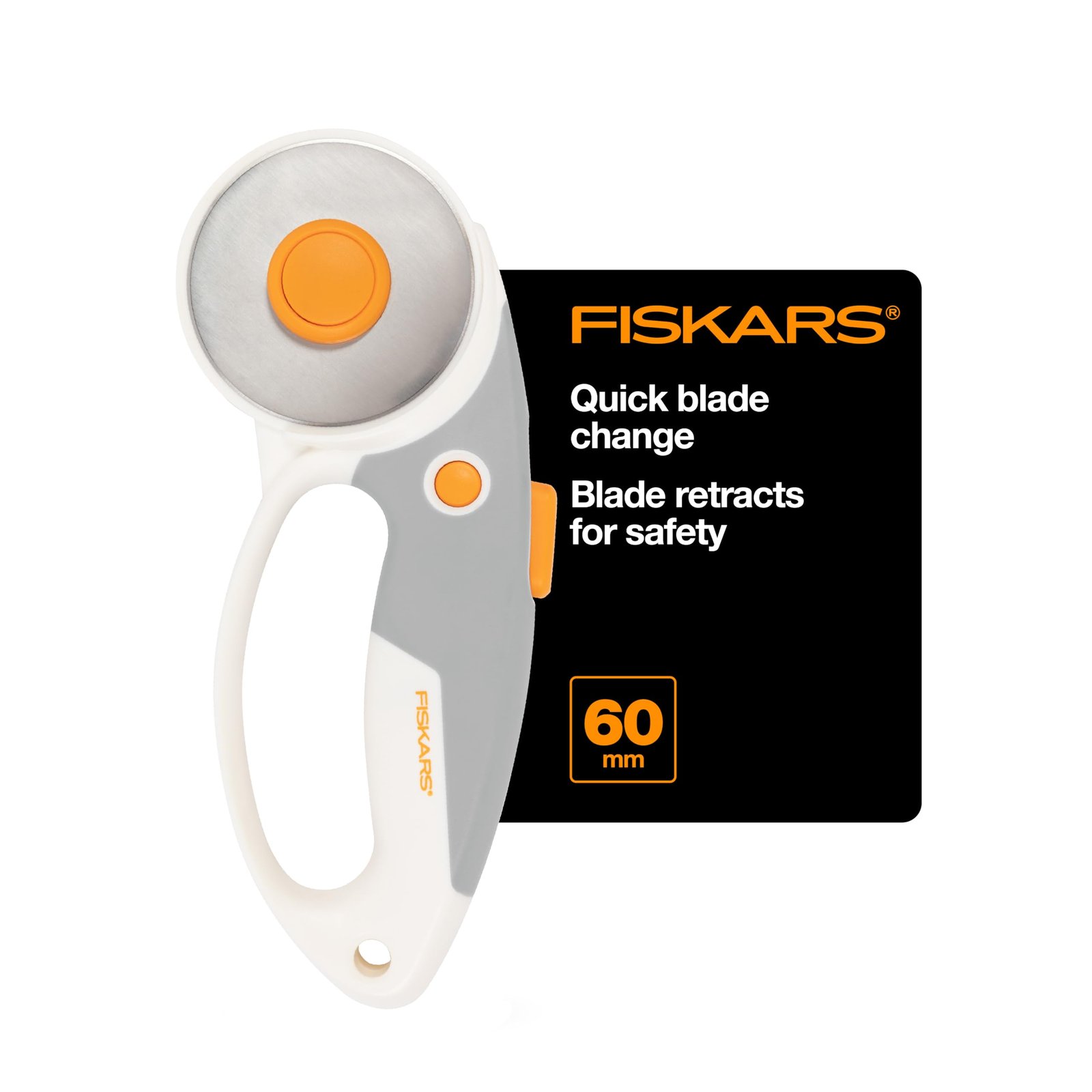
Heavy-duty 60mm rotary cutter featuring titanium carbide blade and ergonomic loop grip handle designed for cutting thick materials including batting, foam, and multiple fabric layers. This professional-grade sewing tool accommodates both right and left-handed users with comfortable loop handle design reducing hand fatigue during extended cutting sessions. The larger blade diameter provides exceptional cutting power for quilters working with layer cakes, strip sets, or heavy canvas materials requiring efficient cutting through substantial thickness.
- 60mm titanium carbide blade
- Ergonomic loop grip handle
- Cuts thick batting and foam
- Multiple layer capability
- Ambidextrous design
- Easy blade replacement
- Heavy-duty construction
- Comfort handle reduces fatigue
Proper Cutting Technique and Safety
Achieving professional results with rotary cutters requires proper technique including correct pressure, blade angle, and motion control. Position your clear ruler firmly along the cutting line, apply moderate downward pressure to the cutter, and push the blade away from your body in one smooth, continuous motion.
Always engage the safety lock immediately after completing each cut, even if you plan to cut again within seconds. The exceptional sharpness that makes rotary blades so effective also demands constant respect and attention, as momentary distraction can result in serious injury requiring medical attention.
Essential Safety Practices
Use rotary cutters exclusively on self-healing cutting mats that provide appropriate resistance while protecting blade edges and work surfaces. Keep your non-cutting hand positioned well away from the blade path, placing it firmly on the ruler several inches from where the blade travels.
Store cutters with blades retracted or locked, disposing of old blades in secure containers designed for sharp objects. Never test blade sharpness with your finger, and consider cut-resistant gloves if working on large projects requiring extensive cutting sessions.
Working with Multiple Fabric Layers
One of the most valuable capabilities of fabric cutting wheels is slicing through multiple fabric layers simultaneously, saving enormous time when preparing quilt blocks or duplicate pattern pieces. With a sharp 45mm blade and proper technique, most crafters comfortably cut through 4-6 layers of quilting cotton in a single pass.
Larger 60mm blades can potentially handle 8 or more layers depending on fabric thickness and blade sharpness. However, working with fewer layers produces cleaner, more accurate cuts, especially when precision matters more than speed for your specific project requirements.
Layer Cutting Tips
Ensure all fabric layers are perfectly aligned and completely flat without wrinkles or folds before cutting. Apply firm, even pressure and complete the cut in a single pass whenever possible, as multiple passes cause layers to shift resulting in uneven edges.
Blade Maintenance and Replacement
Rotary cutter blades are designed as disposable components that require replacement rather than sharpening when they become dull. Signs indicating blade replacement include skipped threads, incomplete cuts requiring multiple passes, or fabric bunching and dragging under the blade during cutting.
Blade longevity varies dramatically based on usage patterns and materials cut, with some quilters replacing blades monthly while occasional crafters might get six months from a single blade. Keep spare blades readily available to avoid interrupting creative flow when dullness inevitably develops.
Extending Blade Life
Never use fabric-cutting blades on paper, cardboard, or other non-textile materials that dull edges rapidly. Clean lint and debris from around the blade regularly, and apply a drop of sewing machine oil to the pivot point occasionally following manufacturer guidelines.
Essential Cutting Mat Requirements
Self-healing cutting mats are non-negotiable companions to rotary cutters, protecting work surfaces while providing the perfect resistance for clean cuts. These specialized mats “self-heal” after cutting, though they eventually wear out and require replacement after extensive use with visible deep cut marks.
Invest in mats at least 24×36 inches for comfortable cutting of fabric yardage, though many crafters eventually acquire multiple sizes for different workspaces. The measurement grids printed on most mats provide helpful guides for squaring fabric and measuring cuts without additional rulers.
Mat Care and Maintenance
Clean cutting mats regularly to remove lint and fiber buildup that can interfere with accurate cutting. Store mats flat or standing on edge to prevent warping, avoiding prolonged exposure to heat sources or direct sunlight that can damage the self-healing surface.
Cutting Specialty Materials
While rotary cutters excel at cutting standard quilting cottons and apparel fabrics, they also tackle specialty materials with appropriate techniques and sometimes dedicated blades. Thin to medium-weight leather and vinyl cut successfully with rotary tools, though these materials dull blades more quickly than fabric.
Heavy Materials
For thick fabrics like denim, canvas, or upholstery materials, use a sharp larger-diameter blade with firm, consistent pressure. Make multiple lighter passes rather than forcing through in one go if encountering resistance that could damage your blade or cutting tool.
Delicate Fabrics
Lightweight silks, chiffons, and sheer fabrics require fresh, extremely sharp blades and gentle pressure to avoid distortion. Place tissue paper beneath and above delicate materials to stabilize them during cutting, preventing shifting or stretching that compromises accuracy.
Pro Tip: Replace your rotary blade at the first sign of dullness rather than struggling with a worn edge. A fresh blade cuts more cleanly with less pressure, protecting both your fabric and your hand from strain while producing professional results.
Choosing Between Rotary Cutters and Scissors
Both rotary cutters and scissors have important roles in textile crafting, with each excelling at different cutting tasks. Rotary cutters deliver superior performance for straight lines, long cuts, and multiple layers, while scissors handle intricate curves, tight corners, and detailed work more effectively.
Keep both tools in your crafting arsenal, selecting between them based on specific project requirements. For quilt piecing and pattern cutting, reach for your rotary cutter without hesitation, but recognize when quality scissors provide better control for appliqué details or thread snipping.
Complementary Tool Strategy
View rotary cutters and scissors as complementary rather than competing tools that together provide complete cutting capability. Understanding the strengths of each enables you to select the perfect tool for every cutting task, optimizing both precision and efficiency throughout your projects.
Top Rotary Cutter Brands
Several manufacturers have established themselves as leaders in rotary cutter production, each offering distinctive features and quality levels. Olfa pioneered rotary cutters in the late 1970s and maintains a reputation for exceptional quality with their signature yellow-and-navy tools recognized worldwide.
Fiskars offers excellent value with reliable performance and distinctive orange-handled tools featuring ergonomic designs that many crafters with hand issues find particularly accessible. Clover focuses on precision and control with their Endurance blade technology claiming extended sharpness compared to standard blades.
Selecting Quality Tools
When choosing between brands, consider factors beyond initial price including handle comfort, blade replacement cost, warranty coverage, and availability of replacement parts. A quality mid-range cutter serves you faithfully for years with only occasional blade replacements, making the investment worthwhile.
Building Your Cutting Station
Creating an efficient cutting workspace enhances both safety and accuracy when using rotary cutters. Position your cutting station at comfortable height preventing hunching, ensure adequate lighting for clearly seeing cutting lines, and maintain a clutter-free workspace that eliminates accident risks.
Essential cutting station accessories include clear acrylic rulers designed specifically for rotary cutting with non-slip backing to prevent dangerous slipping. Basic starter rulers include a 6×24 inch rectangle and a 12.5 inch square, though specific projects might require specialty shapes.
Additional Helpful Accessories
Consider rotating cutting mats for easy block trimming, ruler grips to prevent slipping, and blade disposal containers for safe storage of used blades. A well-organized cutting station with all elements within reach transforms cutting from tedious to enjoyable while reducing strain during extended sessions.
Frequently Asked Questions
A 45mm rotary cutter offers the best versatility for beginners, balancing control with cutting capacity for most sewing and quilting projects. This middle-size option handles everything from cutting strip sets to trimming blocks without the maneuverability limitations of larger blades or the reduced cutting power of smaller sizes. Start with a quality 45mm cutter from reputable brands like Fiskars or Olfa, then add specialized sizes as your skills and project requirements expand.
Using a rotary cutter without a proper self-healing cutting mat significantly increases safety risks and damages both your blade and work surface. While emergency alternatives like cardboard or glass cutting boards exist, they either quickly deteriorate or extremely dull blades. The specialized surface of self-healing mats provides perfect resistance for clean cuts while protecting blade edges and underlying surfaces, making them essential companions that justify their modest investment through extended blade life and improved accuracy.
With a sharp 45mm blade and proper technique, most crafters comfortably cut through 4-6 layers of quilting cotton simultaneously. Larger 60mm blades can potentially handle 8 or more layers depending on fabric thickness and blade sharpness. However, working with fewer layers produces cleaner, more accurate cuts especially when precision matters. Apply firm, even pressure and complete cuts in single passes to prevent fabric shifting that creates uneven edges.
Replace rotary blades at the first sign of dullness including skipped threads, incomplete cuts requiring multiple passes, or fabric bunching under the blade. With typical quilting use on cotton fabrics, quality blades last through 3-6 large projects or 10-15 yards when cutting multiple layers. Replace blades immediately when performance declines rather than struggling with worn edges that damage fabric and strain your cutting tool.
Standard rotary cutters handle gentle curves through small, controlled movements, with smaller 28mm blades providing better maneuverability for tighter curves. For frequent curved cutting, specialty swivel-head rotary cutters feature blades that pivot to follow curves naturally. Use your wrist rather than arm to guide the cutter, practice on scrap fabric first, and recognize when scissors might provide better control for extremely intricate curved designs.
Quality mid-to-high-end rotary cutters prove worthwhile through improved comfort, durability, and consistent performance over years of use. While budget options under $10 exist, they often feature inferior blades that dull quickly or handles that break under pressure. Premium models ($20-40) deliver superior ergonomics reducing hand fatigue, use higher-quality blade materials maintaining sharpness longer, and include reliable safety mechanisms protecting you during use.
Engage the safety lock, locate the central screw holding the blade, loosen without complete removal, carefully remove the old blade without touching edges, insert the new blade ensuring proper alignment, and retighten securely. Many manufacturers include specialized tools allowing blade handling without direct edge contact. Always follow your specific model’s instructions as improper installation leads to poor performance or safety issues, and dispose of old blades in secure containers designed for sharp objects.
Transform Your Fabric Cutting Experience
Fabric cutting wheels revolutionize textile crafting by delivering precision, speed, and reduced physical strain that traditional scissors cannot match. The combination of sharp rotary blades, proper cutting mats, and correct technique transforms fabric preparation from tedious necessity to efficient process enabling faster project completion.
Whether beginning your first quilting project or advancing your garment construction skills, quality rotary cutters provide the accuracy and efficiency that elevate creative results. Understanding blade sizes, safety practices, and maintenance requirements ensures these essential tools serve faithfully for years requiring only periodic blade replacement.
Start your cutting revolution with a versatile 45mm rotary cutter, essential self-healing mat, and clear acrylic rulers to experience the dramatic improvement in accuracy and enjoyment that proper cutting tools deliver to every sewing and quilting project you undertake.