
Fabric Fusion Tape: Complete Guide to No-Sew Bonding for Fabric Projects
Heat-Activated, Washable, and Permanent Double-Sided Adhesive Tape for Hemming, Repairs, and DIY Crafts
Fabric fusion tape creates permanent bonds between fabric surfaces using heat-activated or pressure-sensitive adhesive eliminating the need for sewing skills or equipment. This double-sided tape designed specifically for textiles produces clean, professional results on everything from clothing hems to home décor projects while remaining flexible and machine washable after proper application.
Understanding how fusion tape works and selecting appropriate types for different fabrics ensures successful no-sew projects that withstand regular use and washing. The adhesive technology bonds fabric fibers together creating durable connections that rival traditional stitching in many applications, making fabric crafting accessible to everyone regardless of sewing experience.
What Makes Fabric Fusion Tape Different
Fabric fusion tape consists of specialized adhesive engineered to bond textile fibers together while maintaining flexibility unlike regular tape that stiffens or damages fabrics. The double-sided adhesive activates through heat application or pressure creating permanent connections that move naturally with fabric rather than restricting drape or stretch.
Most fusion tapes feature paper backing on one or both sides allowing precise positioning before final bonding occurs. This repositioning capability prevents mistakes and ensures accurate placement critical for professional-looking results in hemming, appliqué work, and decorative applications.
Heat-Activated vs Pressure-Sensitive
Heat-activated fusion tape requires iron application at specific temperatures to melt adhesive and create bonds between fabric layers. These tapes typically produce stronger, more permanent connections ideal for items requiring frequent washing or heavy use including clothing alterations and home textile projects.
Pressure-sensitive varieties bond immediately when pressed firmly together without requiring heat application. These convenient options work well for quick repairs, temporary holds, or heat-sensitive fabrics that cannot withstand high iron temperatures, though bonds may be less durable than heat-activated alternatives.
Permanent vs Removable Options
Permanent fabric fusion tape creates lasting bonds designed to withstand multiple wash cycles and years of regular wear. These formulations suit projects requiring long-term durability including clothing alterations, upholstery repairs, and home décor installations where removal isn’t anticipated.
Removable fusion tapes provide temporary bonding for testing placement, creating seasonal decorations, or projects requiring periodic adjustment. The lighter adhesive strength allows removal without fabric damage though these options lack the durability needed for frequently washed or heavily used items.
Choosing the Right Fusion Tape
Selecting appropriate fusion tape depends on fabric weight, project type, and whether items will require washing. Understanding these factors prevents adhesive failure and ensures bonds remain secure through intended use.
Tape Width Selection
Narrow tapes measuring 1/4 to 3/8 inch work best for delicate applications including appliqué edges, decorative trim attachment, and lightweight fabric joining. These widths provide adequate bonding surface without adding bulk or creating stiff areas in finished projects.
Medium widths ranging 1/2 to 3/4 inch handle most general applications including clothing hemming, curtain construction, and standard fabric joining. This versatile size range offers sufficient bonding strength while remaining manageable for precise placement.
Wide tapes measuring 1 inch and above serve heavy-duty applications requiring maximum bonding surface including upholstery repairs, thick canvas fabric joining, and multi-layer textile bonding. These substantial widths distribute stress across larger areas preventing separation under heavy use.
Fabric Compatibility
Natural fibers including cotton, linen, and lightweight canvas accept fusion tape readily producing reliable bonds that withstand washing and wear. These absorbent materials allow adhesive penetration creating mechanical bonds within fiber structures for superior holding power.
Synthetic fabrics like polyester, nylon, and blends work well with fusion tape though their smooth surfaces sometimes require roughening for optimal adhesion. Choose tapes specifically formulated for synthetics when working with slick materials to ensure adequate bonding strength.
Delicate fabrics including silk and chiffon require ultra-lightweight fusion tapes designed to avoid damaging fragile fibers. Test these specialty tapes on fabric scraps before committing to final projects ensuring adhesive won’t create visible marks or alter drape characteristics.
Proper Application Techniques
Achieving professional results with fusion tape requires careful preparation and correct application methods. Following proper techniques ensures strong bonds that last through washing and regular use.
Surface Preparation
Wash and dry fabrics before applying fusion tape removing any sizing, oils, or dirt that interfere with adhesion. Pre-washing also allows fabrics to shrink naturally preventing distortion after first washing of completed projects.
Press fabrics thoroughly with iron eliminating wrinkles and creases that prevent full tape contact with material surfaces. Smooth fabric creates stronger bonds by maximizing adhesive contact area and preventing gaps that weaken connections.
Heat Application Method
Set iron to appropriate temperature for fabric type using manufacturer recommendations on both fusion tape and textile care labels. Position tape between fabric layers removing paper backing, then cover with pressing cloth protecting surfaces from direct heat contact.
Apply iron using firm downward pressure holding position for 10-15 seconds without sliding motion. Press and lift technique ensures even heat distribution activating adhesive completely for maximum bonding strength throughout taped area.
Allow bonded fabrics to cool completely before handling giving adhesive time to set properly. Most fusion tapes reach full strength within 24 hours though initial bonds form immediately after cooling to room temperature.
Aleene’s Fabric Fusion Tape 5/8″ Roll
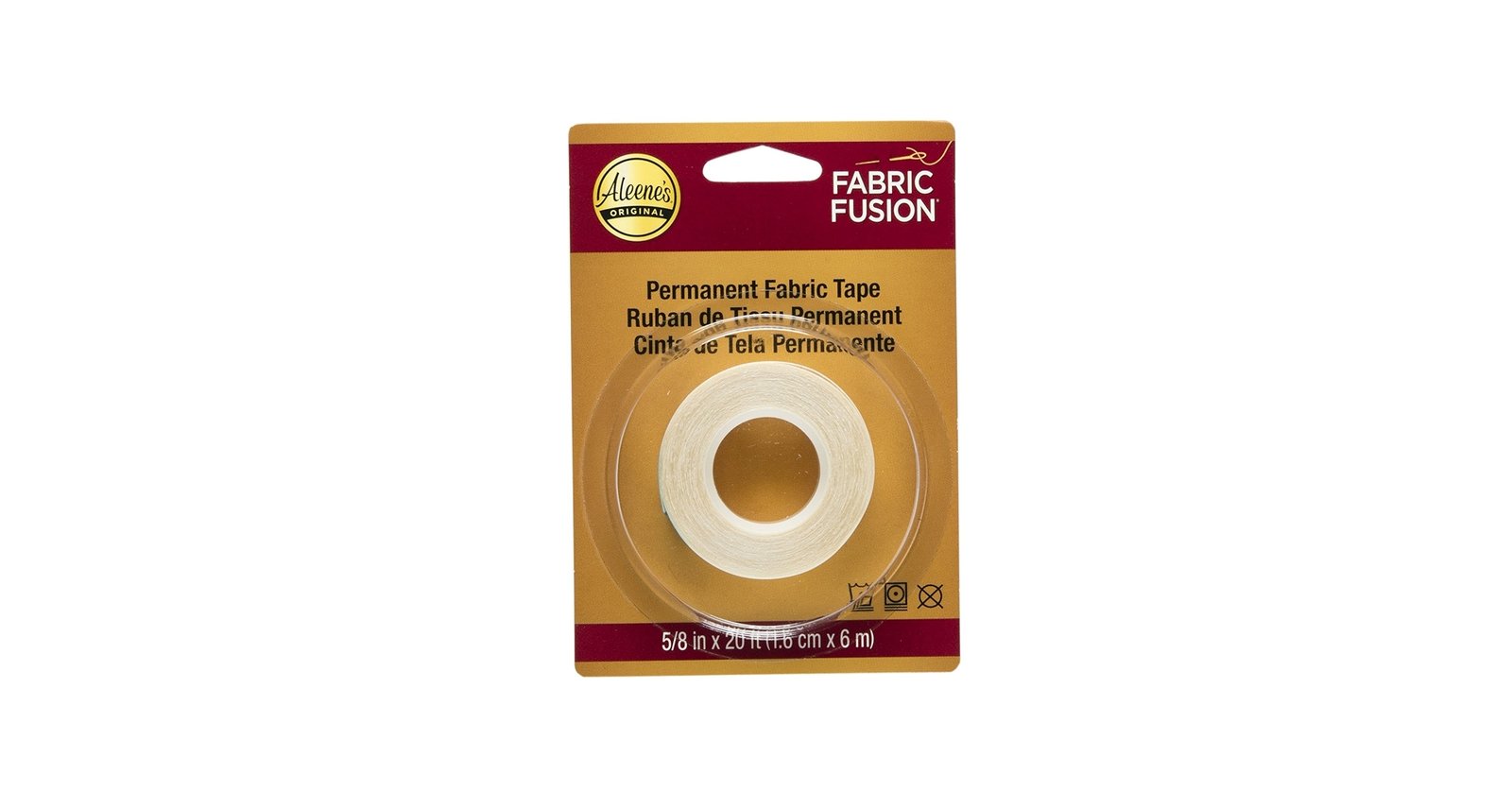
Trusted permanent double-sided fabric adhesive tape measuring 5/8 inch wide on 20-foot roll creating lasting bonds without heat setting requirements for quick no-sew projects and repairs. This versatile tape adheres permanently to most fabrics providing machine washable connections when laundered in cold water, though not recommended for felt materials. The convenient tape format eliminates messy liquid adhesives while delivering reliable bonding strength for hemming, appliqué work, and fabric joining applications requiring durable connections without threading needles.
- 5/8 inch wide format
- 20-foot continuous roll
- Permanent fabric bonding
- No heat setting required
- Machine washable (cold water)
- Double-sided adhesive
- Clean tape application
- Not for use on felt
Creating Perfect Hems Without Sewing
Fabric fusion tape excels at creating clean, professional hems on pants, skirts, curtains, and other textiles requiring length adjustment. The invisible bonding produces results matching sewn hems in appearance while requiring only minutes to complete.
Measuring and Marking
Try on garments marking desired hem length with fabric chalk or pins ensuring even measurement all around. For pants, measure distance from floor maintaining consistency around entire leg circumference preventing uneven results.
Fold fabric to marked line creating crisp edge, then press fold with iron setting crease. This preliminary pressing ensures straight hem alignment during tape application preventing crooked results requiring rework.
Tape Placement Strategy
Position fusion tape along top edge of folded hem approximately 1/4 inch from fold line maximizing bonding surface while keeping tape hidden inside finished hem. Place tape on fabric’s wrong side ensuring adhesive contacts both hem allowance and garment body.
For thick fabrics or wide hems, use multiple parallel strips of fusion tape spaced evenly across hem width. Additional tape strips prevent separation and ensure hems remain flat and secure through washing and wearing.
Quick Repairs and Emergency Fixes
Fabric fusion tape provides instant solutions for wardrobe malfunctions and textile damage requiring immediate attention. Keep small rolls accessible for emergency repairs at home, work, or while traveling.
Fallen Hem Recovery
Reattach dropped hems by inserting fusion tape between separated layers pressing with portable iron or applying firm pressure for pressure-sensitive varieties. These quick fixes last through the day allowing proper repair later if needed.
For emergency situations without iron access, some fusion tapes bond adequately through firm hand pressure or rubbing though heat application produces stronger, longer-lasting results when possible.
Split Seam Reinforcement
Repair split seams by opening fabric slightly, inserting fusion tape along damaged area, then pressing layers together. Apply tape to both sides of split for maximum reinforcement preventing further tearing under stress.
This technique works particularly well for stress points in pants, jacket underarms, and bag seams where sewing remains impractical. The adhesive reinforcement distributes tension preventing concentrated stress that causes repeated failures.
No-Sew Craft Projects
Fabric fusion tape opens creative possibilities for crafters lacking sewing skills or equipment. The simple application process produces professional results on decorative projects and functional textile creations.
Home Décor Applications
Create custom curtains using fusion tape to attach heading tape or form rod pockets eliminating hours of hand sewing. The clean bonds withstand repeated opening and closing while maintaining smooth operation on curtain rods.
Construct throw pillow covers by joining fabric panels with fusion tape creating removable covers for easy cleaning. Position tape near edges ensuring complete sealing while leaving small opening for pillow form insertion.
Design table runners, placemats, and decorative fabric ribbon accents using fusion tape for quick assembly without visible stitching. These projects benefit from tape’s invisible application producing clean finished appearance.
Appliqué and Embellishments
Attach decorative fabric shapes to base materials using fusion tape for permanent appliqué designs without sewing. Position shapes precisely, apply tape to backing, then press firmly creating secure bonds that withstand washing.
Add patches, decorative trims, or fabric gems to clothing and accessories using fusion tape for quick customization. The adhesive holds embellishments securely while remaining flexible enough to move naturally with fabric.
Pro Tip: Always test fusion tape on fabric scraps before applying to final projects. This simple precaution reveals how adhesive interacts with specific materials preventing costly mistakes on completed work.
Washing and Long-Term Care
Proper care extends the lifespan of fusion tape bonds ensuring projects remain secure through multiple wash cycles. Following manufacturer recommendations prevents premature adhesive failure.
Wash Cycle Guidelines
Wait 24-48 hours after application before washing items allowing adhesive to cure completely and reach full bonding strength. Premature washing may weaken connections before adhesive fully sets reducing long-term durability.
Use cold or warm water rather than hot temperatures when laundering fusion tape projects as excessive heat can soften adhesive causing separation. Select gentle wash cycles reducing mechanical stress that may pull bonded areas apart over time.
Turn garments inside-out before washing protecting fusion tape bonds from direct agitation and friction with other items. This simple step extends bond lifespan significantly especially for items washed frequently.
Drying Considerations
Line dry fusion tape projects when possible avoiding high dryer heat that may weaken adhesive bonds. Air drying eliminates heat stress while preventing tumbling action that places mechanical stress on connections.
If machine drying becomes necessary, use low heat settings removing items promptly when dry. Excessive heat exposure or prolonged tumbling can gradually degrade adhesive strength requiring eventual re-bonding or repair.
Removal and Repositioning Options
Despite creating strong bonds, fusion tape can be removed when necessary using proper techniques that minimize fabric damage. Understanding removal methods proves valuable for correcting mistakes or repositioning elements.
Heat Removal Method
Apply heat using iron and pressing cloth softening adhesive sufficiently for gentle separation of bonded layers. Work slowly pulling fabrics apart while still warm preventing tears in delicate materials.
Remove adhesive residue using rubbing alcohol applied with cotton swab gently working remaining sticky areas. Test alcohol on inconspicuous fabric area first ensuring it won’t cause discoloration or damage to specific textiles.
Freezing Technique
Place items in plastic bag then freeze for 1-2 hours making adhesive brittle and easier to crack away from fabric surfaces. This method works particularly well for pressure-sensitive tapes that don’t respond well to heat removal.
Scrape frozen adhesive gently using fingernail or plastic scraper avoiding metal tools that may damage fabric. Work carefully preventing excessive force that could tear delicate materials or distort fabric weave.
Specialty Applications and Advanced Uses
Beyond basic hemming and repairs, fusion tape enables specialized applications requiring creativity and proper technique selection. These advanced uses expand crafting possibilities significantly.
Upholstery Projects
Repair furniture tears and worn areas using heavy-duty fusion tape applied from underneath creating invisible fixes. The strong bonding supports weight-bearing applications better than standard craft-weight varieties.
Construct custom cushion covers using fusion tape along seams eliminating need for specialized upholstery equipment. This approach works especially well for outdoor cushions and decorative pillows requiring periodic removal for cleaning.
Outdoor Fabric Bonding
Join outdoor fabrics for awnings, tarps, and weather-resistant projects using weatherproof fusion tape formulated for exterior conditions. These specialized products resist moisture and temperature fluctuations maintaining bonds through seasonal exposure.
Repair outdoor cushions, boat covers, and camping gear using appropriate fusion tape eliminating expensive professional repairs. The quick bonding prevents further damage from developing while providing adequate strength for continued use.
Character Fabric Projects
Create no-sew projects using printed fabrics like Harry Potter fabric or Marvel fabric with fusion tape joining themed panels. Plan tape placement carefully avoiding covering important character images while ensuring structural integrity.
Construct costumes and themed accessories quickly using fusion tape for time-sensitive projects. The rapid assembly allows completing complex designs without extensive sewing experience or equipment.
Frequently Asked Questions
Most fabric fusion tapes create permanent bonds when properly applied to compatible fabrics and allowed adequate curing time. These bonds withstand regular washing in cold or warm water and normal wear though may gradually weaken after numerous wash cycles or years of heavy use. Heat-activated varieties typically produce more durable permanent bonds than pressure-sensitive options. For truly permanent applications requiring maximum longevity, consider reinforcing fusion tape bonds with occasional stitching in high-stress areas.
Yes, properly applied fabric fusion tape withstands machine washing when you follow care guidelines including waiting 24-48 hours after application before first wash. Use cold or warm water rather than hot temperatures, select gentle wash cycles, and turn garments inside-out for protection. Most quality fusion tapes remain secure through multiple wash cycles though frequent washing in hot water or harsh detergents may gradually reduce bond strength. Line drying or low-heat machine drying extends bond lifespan compared to high-heat drying.
Not all fabric fusion tape requires heat activation as some varieties use pressure-sensitive adhesive bonding immediately when surfaces press together firmly. Heat-activated types require iron application at specific temperatures melting adhesive to create stronger, more permanent bonds ideal for frequently washed items. Pressure-sensitive varieties offer convenience for quick repairs or heat-sensitive fabrics though may produce less durable connections. Check product specifications determining whether your fusion tape needs heat activation or works through pressure alone.
Natural fiber fabrics including cotton, linen, and canvas work excellently with fusion tape producing reliable bonds that withstand washing and wear. Synthetic fabrics like polyester and nylon also bond successfully though may require fusion tapes specifically formulated for smooth synthetic surfaces. Delicate fabrics including silk need ultra-lightweight fusion tapes preventing damage to fragile fibers. Heavy fabrics like denim and upholstery materials require heavy-duty fusion tape varieties providing adequate bonding strength for thick textiles.
Remove fabric fusion tape by applying heat with iron and pressing cloth to soften adhesive then gently separating fabric layers while still warm. Alternatively, freeze items in plastic bags for 1-2 hours making adhesive brittle enough to crack and peel away from fabric surfaces. Clean residual adhesive using rubbing alcohol on cotton swab though test on inconspicuous areas first ensuring no discoloration occurs. Commercial adhesive removers designed for fabrics also work effectively following manufacturer instructions carefully.
Fabric fusion tape provides legitimate alternatives to sewing for many applications including hemming, quick repairs, and no-sew craft projects producing durable results without needles or thread. However, traditional sewing remains superior for heirloom-quality items, high-stress applications bearing significant weight, and professional garments requiring invisible finishes. Many crafters successfully combine fusion tape with strategic stitching getting convenience of tape positioning with permanence of sewing. For casual crafting and everyday repairs, fusion tape often delivers satisfactory results making fabric projects accessible without sewing skills.
Quality fabric fusion tape properly applied on compatible fabrics can last for years or the lifetime of garments when receiving appropriate care. Longevity depends on application quality, washing frequency, fabric type, and stress levels during use. Items undergoing frequent hot water washing or high-heat drying may see shorter bond lifespans requiring periodic re-application. Heavy-duty applications bearing significant weight or constant stress may need reinforcement with stitching for truly long-term durability. Under ideal conditions with proper care, fusion tape bonds remain secure through hundreds of uses.
Related Resources
- Fabric Adhesive – Liquid bonding options
- Fabric Glue – Alternative adhesives
- Fabric Iron – Heat application tools
- Fabric Scissors – Precise cutting
- Fabric Chalk – Marking and measuring
- Fabric Pencil – Precise marking
- Markers for Jeans – Denim marking
- Canvas Fabric – Heavy materials
- Outdoor Fabric – Weather-resistant textiles
- Fabric Bags – Project applications
- Fabric Ribbon – Decorative accents
- Harry Potter Fabric – Character prints
- Marvel Fabric – Licensed materials
- Black Friday Deals – Sale opportunities
Bond Fabrics Without Threading Needles
Fabric fusion tape revolutionizes textile projects by creating permanent bonds without sewing skills or equipment, making professional-looking results accessible to everyone. The specialized adhesive technology produces flexible, washable connections that withstand regular use while requiring only minutes to apply compared to traditional hand-sewing methods.
Whether hemming clothing, repairing household textiles, or creating no-sew craft projects, understanding proper application techniques and selecting appropriate tape types ensures successful results. The versatility of fusion tape extends from quick emergency repairs to complete project construction, offering solutions for both experienced crafters and beginners.
Start your no-sew projects with quality fusion tape, proper heat application tools, and adequate cutting implements to transform fabric crafting from complex challenge into achievable creative expression requiring no specialized sewing knowledge.