
Glow in the Dark Fabric Paint: Complete Application Guide for Luminous Designs
Non-Toxic, Washable, Multi-Color Paint for Clothing, Costumes, DIY Crafts, and Creative Projects
Glow in the dark fabric paint transforms ordinary textiles into luminous creations that capture attention in low-light conditions through phosphorescent pigments that absorb and emit light. This specialized paint adheres permanently to fabric while maintaining flexibility, making it ideal for clothing, costumes, safety gear, and decorative projects.
Understanding application techniques and proper charging methods ensures maximum brightness and longevity from your glow paint projects. The right product selection and fabric preparation create professional results that withstand washing and regular wear while maintaining their captivating luminescence.
What Makes Glow in the Dark Fabric Paint Unique
Glow in the dark fabric paint contains phosphorescent pigments that store light energy and release it gradually creating visible luminescence in darkness. Unlike fluorescent paints requiring continuous UV light, phosphorescent formulations continue glowing after light sources are removed.
The specialized binding agents in fabric formulations allow paint to flex with textiles without cracking or peeling. Quality products maintain fabric breathability and softness while providing durable adhesion through washing and wear.
Phosphorescent vs Fluorescent Properties
Phosphorescent paints absorb light energy during exposure then emit it slowly over hours creating the characteristic afterglow effect. Strontium aluminate pigments in modern formulations provide brighter, longer-lasting glow than older zinc sulfide compounds.
Fluorescent paints only glow under active UV blacklight exposure disappearing immediately when lights turn off. Some dual-action products combine both properties creating designs that fluoresce under blacklight and phosphoresce in complete darkness.
Available Color Options
Traditional yellow-green glow remains brightest and longest-lasting due to human eye sensitivity at this wavelength in low light. Modern formulations offer blue, aqua, purple, pink, and white glow options though these typically provide shorter duration and reduced intensity.
Daytime appearance differs from nighttime glow color with most formulations appearing pale or translucent when uncharged. Invisible formulations appear nearly clear in normal light while still providing visible glow in darkness.
Choosing the Right Glow Paint Product
Selecting appropriate glow in the dark fabric paint depends on project type, fabric material, and durability requirements. Premium formulations justify higher costs through superior brightness, longer glow duration, and better wash resistance.
Quality Indicators
High pigment concentration produces brighter glow and longer visibility with quality products maintaining luminescence for 8-12 hours after charging. Budget options typically glow visibly for only 30-60 minutes before fading below perceptible levels.
Flexibility when dry ensures paint moves with fabric without cracking particularly important for stretch materials and frequently worn garments. Check product labels for machine-washable claims and ASTM D-4236 non-toxic certification.
Application-Specific Formulations
Dimensional or puff paints create raised designs that add tactile interest alongside visual glow effects. These thicker formulations work well for bold designs and decorative accents requiring less precise application.
Airbrush-compatible formulations allow smooth gradients and professional finishes impossible to achieve with brush application. These require proper dilution and equipment setup but deliver superior results for large-area coverage.
Tulip Puff Paint Glow in the Dark 10-Pack
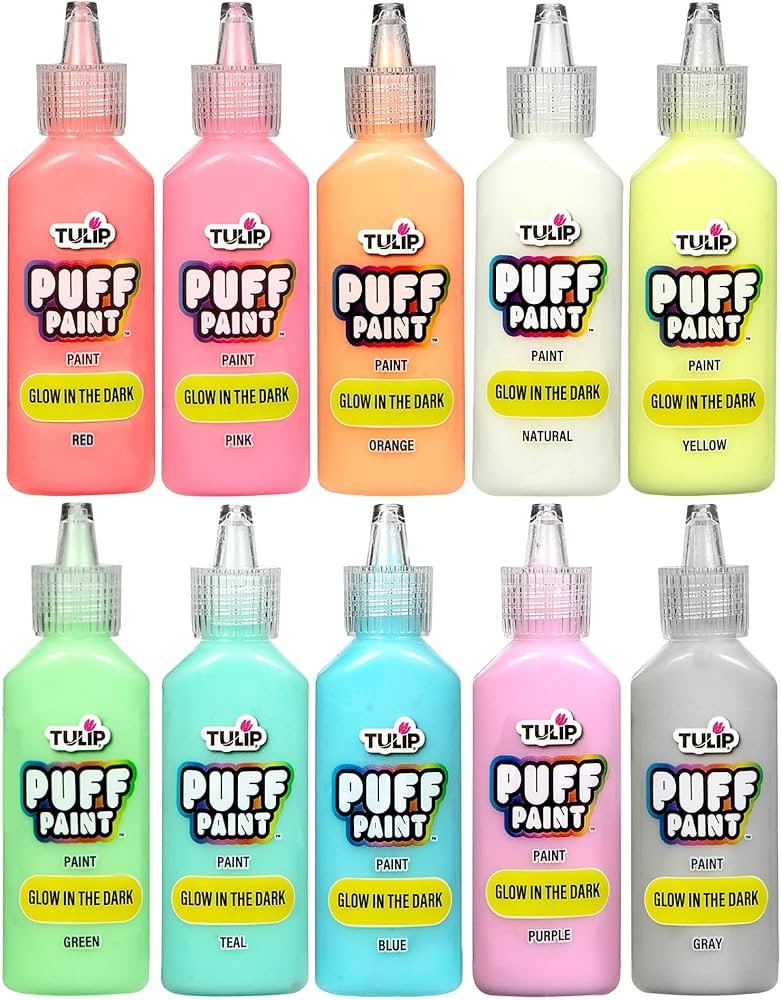
Multi-surface dimensional paint set featuring ten 0.75-fluid-ounce bottles in assorted glow-in-the-dark colors with premium non-toxic formula that remains permanent and machine washable after curing. This versatile puff paint dries soft and flexible without cracking, crumbling, or peeling even on frequently worn garments providing reliable performance through repeated washing cycles. The easy-squeeze bottles with precision tips enable smooth application for detailed designs, text, and decorative accents on fabric, wood, paper, and other craft surfaces.
- 10-pack assorted glow colors
- 0.75 fl oz per bottle
- Non-toxic ASTM certified
- Machine washable formula
- Soft flexible finish
- Precision squeeze tips
- Multi-surface compatible
- Dimensional puff texture
Roizefar 16-Color Glow in the Dark Fabric Paint
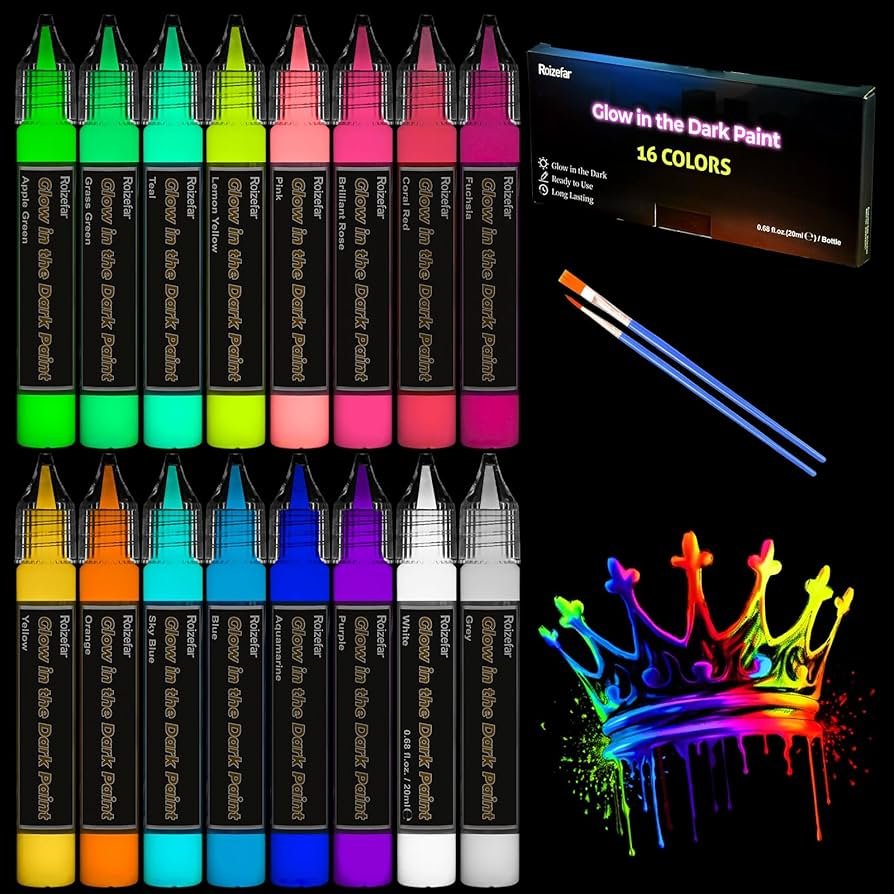
Comprehensive 3D permanent acrylic textile paint set containing sixteen 20ml bottles in vibrant glow-in-the-dark colors including white, yellow, orange, grey, lemon yellow, apple green, grass green, blue, aquamarine, teal, fuchsia, pink, coral red, purple, brilliant rose, and sky blue plus two brushes. Each luminescent paint in this neon craft set has been specially formulated to glow brilliantly and vividly in darkness after charging with light exposure making it ideal for artistic projects on clothes, canvas, t-shirts, and creative applications.
- 16 unique glow colors
- 20ml (0.68 oz) per bottle
- Includes 2 brushes
- 3D permanent formula
- Brilliant vivid glow
- Acrylic textile base
- Neon color range
- Art supply quality
Proper Application Techniques
Successful glow paint application requires proper fabric preparation and methodical technique ensuring even coverage and maximum adhesion. Pre-wash fabrics without fabric softener removing manufacturing finishes that prevent paint bonding.
Surface Preparation
Stretch fabric taut over embroidery hoop or tape to flat surface preventing shifting during application. Place cardboard or plastic sheet between fabric layers preventing paint bleed-through to underlying surfaces.
Mark design placement using disappearing ink or light pencil ensuring accurate positioning before permanent application. Test paint consistency on scrap fabric adjusting thickness if needed for your specific application method.
Layer Building Strategy
Apply multiple thin coats rather than single thick layer achieving better brightness and preventing cracking when fabric flexes. Allow each layer to dry completely before adding subsequent coats typically requiring 2-4 hours between applications.
Build up to 3-5 thin layers for maximum glow intensity without compromising fabric flexibility. Excessive thickness creates stiff, uncomfortable areas prone to cracking and peeling with movement.
Tool Selection
Squeeze bottles with fine tips provide excellent control for precise lines and detailed work directly from packaging. Soft synthetic brushes work well for larger areas using gentle stippling motion rather than heavy brushing.
Stencils require secure attachment and dabbing application preventing paint from bleeding under edges. Use nearly-dry foam applicators for stencil work achieving crisp clean edges.
Charging and Activation Methods
Phosphorescent pigments require light exposure to charge their glow capability with charging efficiency depending on light source type and duration. Understanding optimal charging methods maximizes brightness and glow duration.
Light Source Effectiveness
Direct sunlight provides excellent charging requiring just 5-10 minutes for full activation due to high UV content. Position painted items in bright sunlight before evening events for maximum initial brightness.
UV blacklights offer most efficient artificial charging fully activating phosphorescent pigments in 2-3 minutes. Standard fluorescent lights work moderately well while LED lights prove least effective due to minimal UV emission.
Charging Duration Impact
Brief 30-second exposure produces visible glow lasting only minutes while full 10-15 minute charge enables hours of luminescence. The relationship between charging time and glow duration follows diminishing returns with extended exposure beyond 15 minutes providing minimal additional benefit.
Temperature affects glow performance with phosphorescent pigments functioning optimally at room temperature 65-75°F. Extreme cold reduces brightness while excessive heat temporarily diminishes glow intensity.
Working with Different Fabric Types
Fabric selection significantly impacts application ease and final results with natural fibers generally accepting glow paint more readily than synthetics. Understanding material-specific considerations ensures successful projects.
Natural Fiber Performance
Cotton and cotton blends provide ideal surfaces for glow paint with slight absorbency creating strong bonds while maintaining flexibility. Medium-weight cotton offers best balance between coverage ease and durability.
Canvas and denim accept paint exceptionally well due to textured surfaces providing increased adhesion area. These heavier fabrics maintain glow brightness through numerous wash cycles when properly heat-set.
Synthetic Material Challenges
Polyester and nylon present adhesion difficulties due to smooth non-absorbent surfaces requiring specialized formulations. Apply extra-thin layers and ensure thorough heat-setting for acceptable bonding on synthetic fabrics.
Stretch fabrics need flexible formulations specifically labeled for stretchy materials preventing cracking when extended. Standard glow paint may work on stable-weave synthetics but fails quickly on knits and spandex blends.
Dark Fabric Considerations
Black and dark fabrics absorb light limiting phosphorescent pigment charging efficiency requiring white base coat application. Apply opaque white layer first allowing complete drying before adding glow paint achieving brighter, longer-lasting results.
High-opacity glow formulations designed specifically for dark backgrounds eliminate separate base coat requirements. These premium products cost more but simplify application process while delivering comparable brightness.
Heat-Setting and Curing Process
Proper curing transforms glow paint from surface coating to permanent fabric component ensuring washability and longevity. Following manufacturer-specific instructions prevents premature failure.
Drying Requirements
Allow painted items to air-dry completely for minimum 24 hours before heat-setting ensuring full solvent evaporation. Rushing this step traps moisture causing incomplete curing and reduced durability.
Protect drying projects from dust and debris using clean cloth covering without touching painted surfaces. Maintain adequate ventilation during drying process particularly when working with multiple painted items.
Heat-Setting Methods
Iron painted fabrics from reverse side using temperature appropriate for base material typically medium-high heat for 3-5 minutes. Never iron directly on glow paint as heat damages phosphorescent pigments reducing brightness.
Machine drying provides alternative heat-setting running items on high heat for 30 minutes after air-drying. This method works well for items where ironing proves difficult or when processing multiple pieces.
Pro Tip: Always charge glow paint with UV blacklight or direct sunlight for 10-15 minutes before important events. This full activation produces significantly brighter and longer-lasting glow than brief ambient light exposure.
Washing and Maintenance Guidelines
Properly cured glow paint withstands machine washing when appropriate care practices are followed. Thoughtful maintenance extends both paint adhesion and phosphorescent effectiveness.
Washing Best Practices
Turn painted items inside-out before washing protecting decorated surfaces from direct agitation and friction. Use cold water on gentle cycle with mild detergent avoiding harsh chemicals that degrade paint.
Skip fabric softener and bleach when washing glow-painted items as these products chemically interact with phosphorescent pigments. Line drying proves preferable to machine drying preserving both glow intensity and paint adhesion.
Long-Term Care
Store painted items away from direct sunlight between uses preventing UV degradation of phosphorescent pigments. Fold loosely avoiding creases through painted areas that may stress paint adhesion over time.
Expect gradual brightness reduction after 20-30 washes with premium products maintaining acceptable glow while budget options show significant fading after 5-10 cycles. Touch-up application restores brightness when needed.
Creative Project Applications
Glow in the dark fabric paint enables diverse creative projects from practical safety applications to artistic expression. Understanding popular uses inspires innovative applications.
Costume and Fashion Uses
Halloween costumes transform with strategic glow paint placement creating skeleton effects, ghostly apparitions, or alien features visible in darkness. The paint-only approach avoids battery requirements and weight of LED alternatives.
Fashion designers incorporate subtle glow accents on evening wear creating garments that shift appearance as lighting changes. Hidden patterns emerge at nighttime events adding interactive element to clothing.
Safety and Visibility Projects
Children’s clothing benefits from glow paint details improving visibility during evening activities without requiring electronics. Apply designs to jacket backs, shoe sides, and bag straps enhancing safety.
Outdoor gear including camping equipment and cycling apparel gains functionality through glowing markers. Strategic placement helps locate items in darkness without requiring flashlight or battery power.
Home Decor Applications
Custom pillowcases, curtains, and wall hangings featuring glow designs create ambient lighting effects transforming spaces after dark. Celestial patterns work particularly well for bedroom applications.
Party decorations and event signage utilize glow paint for memorable visual impact. Banners, tablecloths, and fabric backdrops create immersive environments for themed celebrations.
Troubleshooting Common Issues
Understanding how to address application problems saves projects and builds confidence. Most issues have straightforward solutions when identified early.
Cracking and Peeling
Paint cracking when fabric flexes indicates application too thick or insufficient heat-setting. Remove affected areas and reapply using thinner layers with proper curing between coats.
Peeling edges suggest inadequate fabric preparation or incompatible paint-fabric combination. Ensure thorough pre-washing and consider fabric-specific formulations for synthetic materials.
Weak Glow Performance
Insufficient brightness often results from inadequate charging, dark background fabric, or low pigment concentration. Apply white base coat on dark fabrics and ensure full UV charging before viewing.
Short glow duration indicates budget paint formulation or old product with degraded phosphorescent pigments. Invest in premium brands for projects requiring extended luminescence.
Uneven Application
Streaky coverage results from paint applied too thinly in single coat requiring additional layers. Build coverage gradually allowing thorough drying between applications achieving uniform appearance.
Texture differences between painted and unpainted areas suggest thick application stiffening fabric. Use thinner layers and consider diluting paint slightly if manufacturer permits without compromising glow properties.
Safety Considerations and Best Practices
Modern glow in the dark fabric paints from reputable manufacturers meet safety standards for craft use. Following proper handling practices ensures safe creative experiences.
Non-Toxic Formulations
Choose products labeled ASTM D-4236 compliant indicating toxicologist evaluation for safety. Major craft brands formulate children’s lines specifically tested for young user safety.
Avoid vintage glow products manufactured before 1990s which may contain radioactive components or problematic additives. Modern phosphorescent pigments eliminate these historical safety concerns.
Application Safety
Work in well-ventilated areas when painting allowing adequate air circulation during drying. While most formulations are non-toxic, proper ventilation remains good practice.
Minimize direct skin contact particularly for individuals with sensitive skin washing hands thoroughly after handling. Most products cause no issues but basic precautions prevent potential irritation.
Child Supervision Requirements
Supervise children closely during application ensuring proper tool handling and preventing paint ingestion. Most manufacturers recommend their products for ages 6 and up due to required motor skills.
For infant items where mouthing occurs, limit glow paint to areas children cannot reach with mouths. Some brands offer baby-safe formulations specifically tested for this application.
Frequently Asked Questions
Yes, quality glow in the dark fabric paint withstands machine washing when properly applied and heat-set according to manufacturer instructions. Turn painted items inside-out and use cold water on gentle cycle with mild detergent avoiding bleach and fabric softener. Premium formulations maintain acceptable glow and adhesion for 20-30 washes while budget options may fade after 5-10 cycles. Always allow 24 hours drying before heat-setting with iron or dryer ensuring permanent bonding.
Charge glow paint by exposing it to light sources rich in ultraviolet radiation with direct sunlight requiring 5-10 minutes for full activation. UV blacklights provide most efficient artificial charging fully activating phosphorescent pigments in 2-3 minutes of direct exposure. Standard fluorescent lights work moderately well requiring longer exposure while LED lighting proves least effective due to minimal UV content. Charging duration directly correlates with glow brightness and duration with full charge enabling hours of luminescence.
Yes, glow paint works on black fabric but requires white base coat application for optimal results since dark colors absorb light limiting phosphorescent pigment charging. Apply opaque white fabric paint first allowing complete drying before adding glow layers achieving brightness comparable to light-colored fabrics. Alternatively, specialized high-opacity glow formulations designed for dark backgrounds eliminate separate base coat requirements though typically cost more. The contrast of glowing elements against black creates dramatic visual impact.
Quality glow paint properly applied and cured can remain adhered to fabric for years matching the garment’s natural lifespan when cared for appropriately. Each glow cycle lasts 30 minutes to 12 hours depending on product quality and pigment concentration with premium formulations maintaining visible luminescence significantly longer. Over time phosphorescent pigments gradually degrade retaining approximately 80% original brightness after one year and 50-60% after 3-5 years though continuing to function at reduced intensity indefinitely.
Yes, modern glow in the dark fabric paints from reputable manufacturers are non-toxic and safe for children when used as directed with products meeting ASTM D-4236 safety standards. Choose brands specifically labeled for children’s use and supervise application ensuring proper handling without paint ingestion. Most manufacturers recommend their products for ages 6 and up due to required motor skills. For infant items limit glow paint to areas children cannot mouth or select baby-safe formulations specifically tested for this application.
Yes, you can mix glow paint with regular fabric paint to create custom colors though doing so proportionately dilutes the glow effect. Start with clear glow medium and add small amounts of regular fabric paint maintaining 80% glow to 20% color ratio maximum for preserving brightness. Metallic fabric paints complement glow effects well with reflective particles enhancing light absorption during charging. Always test color combinations on scrap fabric before applying to final projects as some mixtures may produce unexpected results.
Natural fiber fabrics particularly medium-weight cotton provide ideal surfaces for glow paint application with slight absorbency creating strong bonds while maintaining flexibility. Canvas and denim work exceptionally well due to textured surfaces providing increased adhesion area maintaining brightness through numerous washes. Cotton blends with up to 40% polyester offer similar benefits with enhanced durability. Pure synthetic fabrics like polyester require specialized formulations and extra care while stretch fabrics need flexible formulations preventing cracking when extended.
Create Luminous Textile Designs
Glow in the dark fabric paint transforms ordinary textiles into captivating creations that shine in darkness offering endless creative possibilities for clothing, costumes, safety gear, and decorative projects. The phosphorescent technology provides reliable luminescence without batteries or power sources making it practical for diverse applications.
Whether designing theatrical costumes, enhancing children’s safety visibility, or creating ambient home decor, understanding proper application and charging techniques ensures professional results. Quality product selection and careful fabric preparation create durable glow effects that withstand regular wear and washing.
Start your luminous projects with premium glow paints and explore the creative potential of this fascinating medium that bridges artistic expression with functional illumination in truly unique ways.