
Joann Fabric Markers Tulip: Complete Guide to Permanent Fabric Decoration
Premium, Multi-Color, and Specialty Tulip Markers for T-Shirts, Shoes, Crafts, and DIY Fabric Projects
Joann Tulip fabric markers deliver permanent, vibrant color on textiles including t-shirts, shoes, tote bags, and home décor without bleeding or fading after washing. These specialized markers contain dyes that bond with fabric fibers when heat-set, creating lasting designs that withstand years of wear and laundering.
Understanding how Tulip markers work on different fabrics and mastering proper application techniques ensures professional-looking results on every project. The extensive color range from basic primaries to neons, metallics, and specialty dark fabric formulations makes Joann Tulip markers essential tools for personalizing textiles.
What Makes Joann Tulip Fabric Markers Different
Tulip fabric markers contain specially formulated dyes designed to penetrate and bond with fabric fibers rather than sitting on the surface like regular markers. This molecular bonding creates permanent designs that resist fading through multiple wash cycles when properly heat-set.
The water-based, non-toxic formula makes Joanns Tulip markers safer than solvent-based alternatives while delivering vibrant colors on cotton, canvas, and blended fabrics. Unlike temporary markers that wash out or permanent markers not designed for fabric that crack and peel, Tulip markers maintain flexibility matching fabric movement.
Permanent vs Washable Performance
Properly heat-set Tulip marker designs become permanent withstanding regular machine washing without significant color loss. The permanence depends on correct heat-setting, fabric type, and washing conditions rather than the markers themselves being inherently permanent without setting.
Designs remain vibrant for years when heat-set thoroughly using iron, dryer, or heat press methods following package instructions. Skipping heat-setting leaves designs vulnerable to washing out completely, making this final step essential for permanence.
Tulip Color Options Available
Standard Tulip marker sets at Joanns include basic rainbow palettes with primary colors, black, and white suitable for most projects. Extended collections offer pastels, neons, metallics, and glitter effects expanding creative possibilities beyond basic colors.
Specialty dark fabric formulations use opaque pigments showing vibrant color on black and dark-colored textiles where standard markers disappear. These specialized markers have thicker consistency requiring gentle shaking before use and slightly longer drying times.
Fine Point vs Brush Tip Options
Fine point Tulip markers deliver precise lines ideal for detailed work including lettering, intricate patterns, and small-scale designs. The bullet-style tips maintain consistent line width preventing variation that compromises clean appearance.
Brush tip markers provide variable line width depending on pressure and angle, mimicking paintbrush effects for artistic designs. These versatile tips create both thin lines and broad strokes within single markers reducing the number of tools needed.
Choosing the Right Tulip Markers at Joanns
Selecting appropriate Tulip marker sets depends on project type, fabric color, and desired effects. Understanding available options prevents purchasing incompatible formulations or insufficient color ranges.
Starter Sets vs Complete Collections
Basic Tulip sets containing 6-12 markers provide essential colors sufficient for most beginners starting fabric decoration. These affordable starter options include primary colors and black offering adequate range for simple personalization projects.
Complete collections featuring 20-30 markers deliver extensive color palettes including intermediate shades reducing need for color mixing. Premium sets justify higher cost through expanded creative possibilities and convenience of having exact colors needed.
Consider project frequency when deciding between starter and complete sets—occasional crafters benefit from basic collections while regular fabric decorators appreciate comprehensive options. Joanns often offers promotional pricing making larger sets more affordable during sales events like seasonal promotions.
Standard vs Dark Fabric Formulations
Standard Tulip markers work excellently on white, cream, and light-colored fabrics where dye colors show true vibrancy. These regular formulations require light backgrounds displaying color accurately without modification.
Dark fabric Tulip markers contain opaque pigments creating visible designs on black, navy, and other dark textiles. The specialized formulation costs more than standard markers but provides essential capability for decorating dark garments.
Purchase both standard and dark fabric formulations if working with varied fabric colors ensuring appropriate markers for each project. Attempting to use standard markers on dark fabrics produces disappointing invisible results wasting time and materials.
Individual Markers vs Multi-Packs
Multi-pack Tulip sets offer better per-marker value than individual purchases while ensuring color coordination across collections. Pre-selected palettes eliminate guesswork about which colors work together harmoniously.
Individual marker purchases allow replacing depleted colors without buying entire new sets or adding specific shades to existing collections. This flexibility proves valuable once you identify frequently used colors or need specialty shades.
Tulip 20-Piece Rainbow Fabric Marker Set
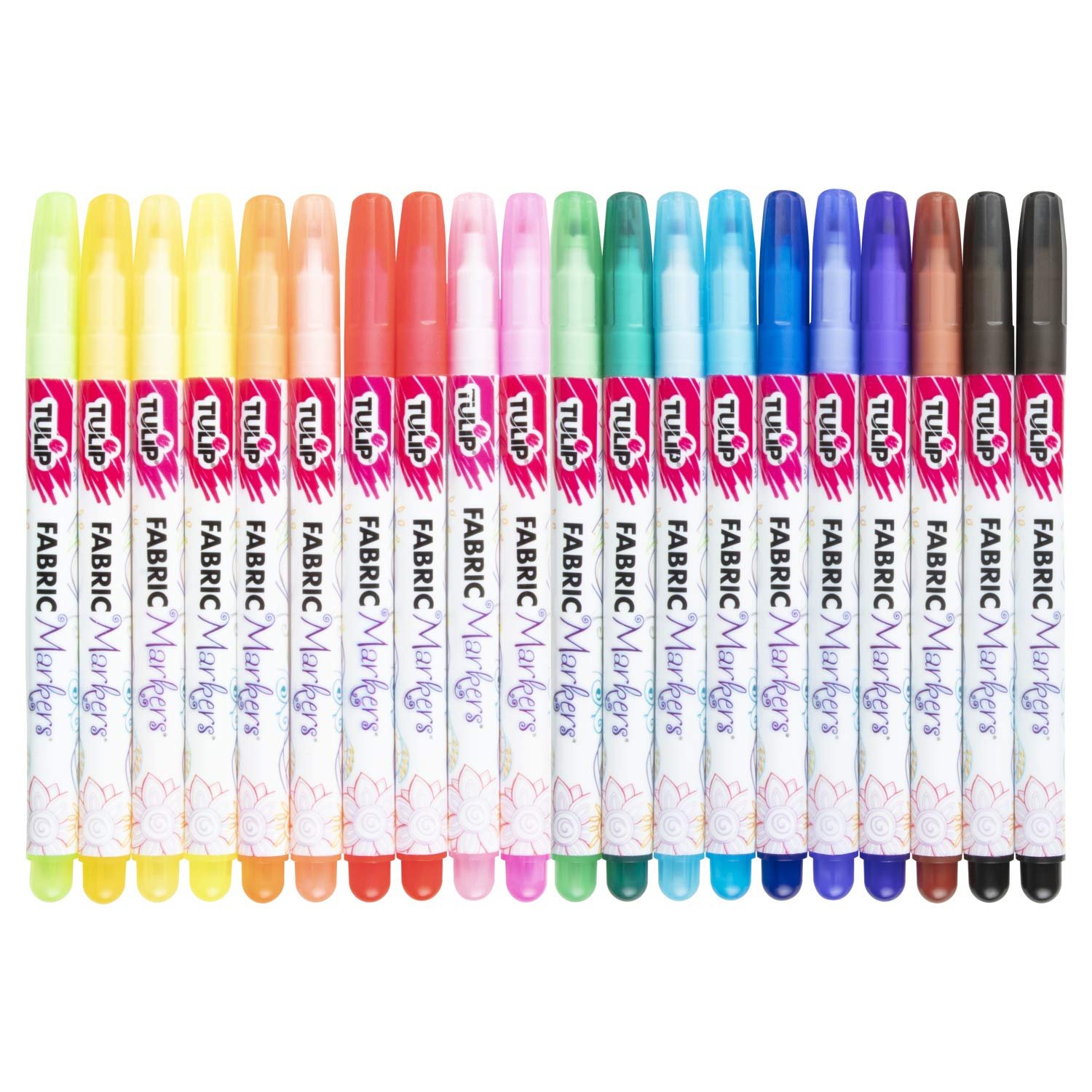
Premium 20-piece Joann Tulip fabric marker collection featuring highly pigmented inks in must-have rainbow palette including neon pink, light pink, reds, oranges, yellows, greens, blues, purples, brown, and blacks perfect for personalizing clothing, shoes, and fabric crafts. These fine-tip bullet markers deliver bold, colorful finishes on light fabrics and craft surfaces with permanent, fade-resistant results even after multiple machine washes. The non-toxic water-based formula makes these Tulip markers safe for all ages while providing professional-quality designs transforming ordinary fabrics into extraordinary personalized creations.
- 20 vibrant rainbow colors
- Fine bullet tip design
- Highly pigmented inks
- Permanent when heat-set
- Machine washable results
- Non-toxic water-based formula
- Fade-resistant colors
- Works on light fabrics
Best Fabrics for Tulip Marker Projects
Natural fiber fabrics including 100% cotton, linen, and canvas accept Tulip marker dyes most successfully allowing deep color penetration. The absorbent structures enable dye bonding creating crisp lines without excessive bleeding.
Cotton blends containing minimum 50% cotton content work well with Tulip markers though higher cotton percentages improve results. Polyester-dominant blends resist dye penetration producing lighter colors requiring multiple applications achieving desired vibrancy.
Fabric Weight Considerations
Medium-weight fabrics like t-shirt material provide ideal surfaces for Tulip markers balancing absorbency with structural stability. These versatile weights accept dye readily without excessive bleed-through preventing back-side staining.
Lightweight fabrics including thin cotton and rayon require protective barriers between layers preventing marker transfer. Insert cardboard or plastic sheets separating fabric layers ensuring designs don’t bleed through accidentally marking underneath surfaces.
Heavy-weight fabrics such as canvas and denim may require multiple color applications achieving full saturation. The dense weaves resist initial dye penetration necessitating patient layering building desired color intensity.
Fabric Preparation Requirements
Pre-wash fabrics before applying Tulip markers removing sizing, finishes, and fabric softener residues that repel dye. This crucial preparation step ensures optimal dye bonding preventing premature fading and bleeding.
Iron fabrics smooth eliminating wrinkles providing flat working surfaces for accurate marker application. Wrinkled fabrics cause uneven dye distribution and make precise line work nearly impossible.
Allow washed fabrics to dry completely before decorating—moisture interferes with dye bonding causing bleeding and lighter colors. Work only on bone-dry fabrics ensuring markers perform as designed.
Problematic Fabric Types
Highly synthetic fabrics including 100% polyester and nylon resist water-based Tulip marker dyes producing light, uneven color. These materials require specialty fabric paints rather than markers achieving permanent decoration.
Waterproof and water-resistant fabrics treated with protective coatings prevent dye penetration making Tulip markers ineffective. Remove or avoid treated fabrics when planning marker-based decoration projects.
Stretchy fabrics containing significant spandex or elastane content may crack designs when stretched after heat-setting. Consider using flexible fabric markers specifically formulated for stretch materials on athletic wear.
Proper Tulip Marker Application Techniques
Achieving professional results with Joanns Tulip markers requires proper technique including fabric preparation, application method, and heat-setting. Following recommended procedures ensures vibrant, long-lasting designs.
Design Planning and Transfer
Sketch designs on paper before applying to fabric allowing adjustments without wasting materials or making permanent mistakes. Plan color placement ensuring harmonious combinations and adequate contrast.
Transfer designs to fabric using fabric pencil or fabric chalk creating light guidelines. These temporary markings wash out after heat-setting leaving only intended marker designs.
For complex designs, use transfer paper or light box tracing methods ensuring accurate reproduction. Position designs carefully considering fabric grain and garment construction before committing to permanent marking.
Marker Application Method
Hold Tulip markers at 45-degree angle maintaining consistent pressure for even ink flow. Too vertical positioning produces light, inconsistent lines while excessive pressure forces too much dye causing bleeding.
Apply colors in light-to-dark order preventing darker shades from contaminating lighter ones through accidental contact. Start with yellows, oranges, and light colors before adding reds, blues, and blacks.
Allow each color section to dry completely before adding adjacent colors preventing unwanted bleeding and color mixing. Patient layering produces cleaner, more professional results than rushing application.
Preventing Bleeding and Mistakes
Insert cardboard barriers between fabric layers preventing marker transfer to back sides or underlying garment sections. Cut barriers slightly larger than design areas ensuring complete protection.
Work on taut, flat surfaces stretching fabric gently without distorting grain preventing bunching that causes uneven application. Use fabric clips securing edges maintaining fabric tension throughout work sessions.
Test markers on fabric scraps before working on final projects verifying color appearance and checking for excessive bleeding. Different fabric types behave differently requiring individual testing.
Layering and Shading Techniques
Build color depth through multiple light applications rather than single heavy coats achieving gradual color intensity. This controlled approach prevents over-saturation while allowing precise shading effects.
Create gradient effects by gradually reducing pressure or mark density across areas producing smooth color transitions. Blend adjacent colors while still wet using clean marker tips gently working boundaries.
Heat-Setting Tulip Marker Designs
Heat-setting transforms water-based Tulip marker dyes into permanent designs that withstand washing and wear. This critical final step requires proper temperature, timing, and technique ensuring lasting results.
Iron Heat-Setting Method
Allow completed designs to dry minimum 24 hours before heat-setting ensuring all moisture evaporates completely. Premature heat-setting traps moisture preventing proper dye bonding.
Set iron to appropriate temperature for fabric type—typically cotton setting for cotton fabrics—using dry heat without steam. Steam introduces moisture interfering with dye setting process.
Place clean pressing cloth or plain paper over designs protecting both artwork and iron surfaces from direct contact. Press firmly using circular motions for 3-5 minutes covering entire design area thoroughly.
Avoid moving iron back and forth quickly which reduces heat transfer—maintain steady pressure allowing adequate heat penetration. The fabric should feel very hot to touch after proper heat-setting.
Dryer Heat-Setting Alternative
Place dried decorated items in dryer set to hottest temperature safe for fabric running full 30-minute cycle. This hands-off method works well for items difficult to iron including shoes and structured bags.
Remove items promptly after cycle completion allowing cooling before handling. Multiple items can be heat-set simultaneously making dryer method efficient for batch projects.
Heat Press Professional Method
Commercial heat presses provide consistent temperature and pressure ideal for professional results on multiple items. Set temperature to 350°F or fabric-appropriate setting applying firm pressure for 30-45 seconds.
Use press cloth protecting designs from direct heat plate contact preventing shine or scorch marks. Heat press method offers fastest, most reliable results for high-volume production.
Verifying Proper Heat-Setting
Test heat-setting success by gently rubbing cooled design with damp cloth checking for color transfer. Properly set designs remain firmly attached without dye release.
Wait minimum 72 hours after heat-setting before first wash allowing complete dye curing. Premature washing may compromise even properly heat-set designs.
Pro Tip: Always heat-set Joanns Tulip marker designs for the full recommended time even when fabric feels hot. That extra minute of heat application makes the difference between designs that last years versus those that fade after few washes.
Washing and Care Instructions
Properly heat-set Tulip marker designs withstand regular machine washing when following recommended care procedures. Understanding optimal washing practices maximizes design longevity.
First Wash Guidelines
Wait 72 hours after heat-setting before initial wash allowing complete dye curing within fabric fibers. This waiting period proves critical for permanent bonding.
Turn decorated items inside-out protecting designs from direct agitation and friction during washing. This simple step significantly reduces wear on marker artwork.
Use cold water on gentle cycle with mild detergent avoiding harsh chemicals that break down dye bonds. Hot water and aggressive agitation accelerate fading.
Long-Term Care Practices
Avoid chlorine bleach and oxygen-based brighteners that chemically attack fabric dyes causing premature fading. Select color-safe detergents formulated for preserving textile colors.
Skip fabric softeners which coat fibers potentially weakening dye bonds over time. Softeners also reduce absorbency making future marker applications on same items problematic.
Line dry decorated items when possible avoiding high dryer heat that accelerates fading. If machine drying becomes necessary, use lowest heat setting removing items while slightly damp.
Iron decorated items on reverse side if pressing becomes necessary protecting designs from direct heat exposure. Use press cloth if ironing design side remains unavoidable.
Stain Treatment Considerations
Treat stains on decorated items carefully avoiding scrubbing directly on marker designs. Apply stain removers to undecorated areas or test thoroughly on hidden sections first.
Avoid spot-treating marker designs with rubbing alcohol or acetone-based removers that dissolve dyes. These solvents remove stains but also remove intentional decoration.
Popular Tulip Marker Project Ideas
Joanns Tulip fabric markers enable countless creative projects from simple personalization to elaborate artistic designs. The versatile markers adapt to various skill levels and project types.
Clothing Customization
Personalize plain t-shirts with names, quotes, or original artwork creating unique garments impossible to find in stores. Simple text designs take minutes while elaborate graphics challenge artistic abilities.
Update outdated clothing with trendy designs extending wardrobe life and reducing waste. Transform boring basics into statement pieces reflecting personal style.
Create matching family shirts for reunions, vacations, or special events using Tulip markers on coordinating garments. Consistent designs across multiple items produce professional-looking group apparel.
Design custom baby onesies making personalized gifts for new parents using washable permanent decoration. Sweet names, dates, or simple graphics create cherished keepsakes.
Footwear Decoration
Transform plain canvas sneakers into custom footwear using Tulip markers for all-over designs or accent details. The permanent decoration withstands walking wear better than temporary methods.
Add decorative elements to fabric shoes including espadrilles, flats, and slip-ons personalizing purchased footwear. Small design touches elevate basic shoes into unique statement pieces.
Bag and Accessory Projects
Customize plain tote bags creating personalized shopping bags, book bags, or gift packaging using Tulip marker designs. Durable canvas bags provide excellent surfaces for permanent decoration.
Decorate fabric pouches, pencil cases, and cosmetic bags adding personality to organizational accessories. Small projects perfect Tulip marker techniques before tackling larger items.
Design custom fabric patches using scrap fabric and Tulip markers creating unique embellishments for jackets, backpacks, or jeans. Sew or use fabric adhesive attaching finished patches.
Home Décor Applications
Create custom pillowcases featuring names, quotes, or decorative patterns adding personal touches to bedrooms. Washable designs maintain appearance through regular laundering.
Design coordinating kitchen linens including tea towels, napkins, and table runners using themed Tulip marker decoration. Matching sets create cohesive looks rivaling purchased items.
Personalize fabric wall hangings, banners, and pennants creating custom room décor reflecting individual interests. Tulip markers enable detailed designs impossible with fabric paint.
Character and Licensed Fabric Projects
Enhance character fabrics like Harry Potter or Marvel prints with additional personalization using complementary Tulip marker colors. Add names or custom elements to themed projects.
Create original character-inspired designs on plain fabrics when licensed prints aren’t available or desired. Tulip markers enable fan art that avoids direct copyright reproduction.
Troubleshooting Common Tulip Marker Problems
Understanding how to address Tulip marker issues saves projects from failure and builds confidence in decoration techniques. Most problems have simple solutions when identified early.
Fixing Fresh Mistakes
Blot wet marker mistakes immediately using clean paper towels avoiding rubbing that spreads dye further. Quick action prevents dye from setting deeply into fibers.
Apply rubbing alcohol to cotton swabs dabbing gently on fresh mistakes lifting dye before it sets. Rinse treated areas with cold water immediately after alcohol application.
For mistakes on white or light fabrics, try diluted bleach solution applied carefully to affected areas only. Test this aggressive approach on hidden fabric areas first preventing widespread damage.
Addressing Dried Mistakes
Dried mistakes before heat-setting sometimes remove using rubbing alcohol and gentle scrubbing with soft brush. Success depends on fabric type and time elapsed since application.
Cover irreparable mistakes using complementary design elements turning errors into intentional features. Strategic additions can disguise problems while enhancing overall design.
Apply fabric paint in matching background colors covering mistakes completely on non-heat-set designs. This solution works best on light-colored fabrics with small error areas.
Reviving Dried-Out Markers
Dip dried marker tips briefly in warm water attempting to rehydrate dye allowing continued use. This temporary fix works for markers recently dried out but not completely empty.
Store markers horizontally with caps tightly secured preventing premature drying and extending usable life. Proper storage maintains marker functionality between projects.
Replace severely dried markers rather than fighting poor performance wasting time on inconsistent results. Fresh markers ensure optimal performance and color vibrancy.
Preventing Excessive Bleeding
Use lighter pressure during application allowing controlled dye release preventing over-saturation that causes bleeding. Heavy-handed marking forces excessive dye into fabric.
Work on properly prepared fabrics ensuring pre-washing removes sizing and finishes that cause unpredictable dye behavior. Fabric preparation proves essential for consistent results.
Allow complete drying between adjacent colors preventing wet-on-wet bleeding that blurs design edges. Patient application produces crisper, more professional results.
Advanced Tulip Marker Techniques
Mastering basic Tulip marker application opens doors to advanced techniques producing professional-quality designs. Experimenting with specialized methods expands creative possibilities.
Stenciling with Tulip Markers
Secure stencils firmly using painter’s tape or temporary adhesive preventing shifting during application. Movement causes blurred edges ruining crisp stencil advantages.
Dab or stipple Tulip markers through stencil openings rather than brushing preventing dye from bleeding under edges. Vertical dabbing motion produces cleanest results.
Remove stencils carefully while ink remains wet allowing any small bleeds to dry naturally. Premature removal sometimes pulls up wet dye creating unwanted smearing.
Clean stencils immediately after use preventing dried dye buildup that affects future applications. Proper maintenance extends stencil life through multiple projects.
Creating Gradient Effects
Apply darkest color first gradually reducing pressure or mark density creating smooth color transitions. This controlled technique mimics airbrushed gradients using simple markers.
Blend adjacent colors while still wet using clean marker tips or slightly damp brushes. Work quickly before dyes dry permanently maintaining workable blend zones.
Layer complementary colors building custom shades impossible to achieve with single marker applications. Transparent layering creates depth and dimension in designs.
Detailed Line Work
Use fine-point Tulip markers for intricate details including lettering, fine patterns, and small-scale elements. Bullet tips maintain consistent width producing professional-looking precision.
Practice lettering on paper perfecting letter forms before applying to fabric projects. Consistent letter sizing and spacing separate amateur from professional-looking text.
Use straight-edge guides or fabric marking tools creating perfectly straight lines for geometric designs. Simple tools dramatically improve precision in structured patterns.
Combining with Other Techniques
Pair Tulip markers with fabric stencils and decorative ribbons creating mixed-media textile art. Combining techniques produces unique effects impossible with single methods.
Add marker details to machine-sewn projects using quality sewing equipment creating fully customized garments. The combination of construction and decoration produces professional-quality personalized clothing.
Safety Considerations for Tulip Markers
Joanns Tulip fabric markers meet safety standards for art materials though proper use and supervision remain important. Understanding safety guidelines ensures responsible crafting.
Child Safety Guidelines
Supervise children under 12 when using Tulip markers ensuring proper handling and preventing marker misuse. The fine tips pose minimal choking hazard but require responsible adult oversight.
Teach children to cap markers immediately after use preventing drying and accidental staining. Proper habits developed early extend marker life and reduce mess.
Provide protective covering for work surfaces and clothing preventing permanent stains on unintended surfaces. Old newspapers or plastic sheeting protect tables and floors.
Ensure adequate ventilation when using Tulip markers though water-based formula produces minimal odor. Fresh air circulation creates comfortable working environment.
Storage and Handling
Store Tulip markers horizontally in cool, dry locations away from direct sunlight extending usable life. Extreme temperatures and moisture affect marker performance negatively.
Keep markers out of reach of very young children preventing unsupervised access. Secure storage prevents accidents while maintaining marker organization.
Dispose of dried-out markers according to local waste guidelines checking recycling options for plastic components. Responsible disposal minimizes environmental impact.
Comparing Tulip to Other Fabric Marker Brands
Understanding how Joanns Tulip markers compare to alternatives helps make informed purchasing decisions. Different brands offer varying performance characteristics and price points.
Tulip vs Sharpie Fabric Markers
Tulip markers provide better color retention after multiple washes compared to Sharpie fabric markers showing less fading over time. The specialized fabric formulation outperforms general-purpose permanent markers on textiles.
Sharpie markers offer broader retail availability and sometimes lower prices appealing to casual crafters. However, serious fabric decorators prefer Tulip’s superior wash fastness and color vibrancy.
Tulip vs Crayola Fabric Markers
Crayola fabric markers target younger users with simplified formulations and child-friendly marketing. Tulip markers deliver more professional results suitable for adult crafting and gift-worthy projects.
Both brands offer non-toxic formulations safe for supervised children’s use. Tulip’s extended color range and specialty options provide more creative versatility.
Price and Value Comparison
Tulip markers command moderate pricing reflecting quality formulations and reliable performance. The slightly higher cost compared to generic markers justifies itself through superior longevity and color retention.
Watch for Joann sales and promotions making premium Tulip markers more affordable. Seasonal discounts and loyalty program benefits reduce per-marker cost significantly.
Storing and Organizing Tulip Marker Collections
Proper storage extends Tulip marker life while keeping collections organized for efficient project setup. Developing good storage habits protects marker investment.
Optimal Storage Conditions
Store markers horizontally preventing dye from settling at one end ensuring consistent ink flow. Vertical storage causes uneven dye distribution affecting performance.
Maintain moderate temperature avoiding extreme heat or cold that affects dye chemistry. Room temperature storage preserves marker quality through extended periods.
Keep markers away from direct sunlight preventing dye degradation and plastic component deterioration. Dark storage locations preserve marker integrity longer.
Organization Systems
Sort Tulip markers by color family using labeled containers or divided storage boxes. Color organization speeds project setup and reveals which shades need replacing.
Separate standard from specialty markers including dark fabric formulations preventing confusion during projects. Clear organization prevents using wrong marker types accidentally.
Create portable storage solutions for taking markers to crafting groups, classes, or travel projects. Compact organization enables crafting anywhere inspiration strikes.
Frequently Asked Questions
Yes, Joanns Tulip fabric markers become permanent on fabric when properly heat-set using iron, dryer, or heat press methods. The water-based dyes bond with fabric fibers at molecular level resisting fading through multiple washes. Permanence depends on correct heat-setting technique, fabric type, and washing conditions rather than markers being inherently permanent without setting. Properly prepared and heat-set designs remain vibrant for years even with regular machine washing using cold water and mild detergent.
Standard Tulip markers work best on light-colored fabrics where dye colors show true vibrancy. For dark fabrics including black, navy, and deep colors, use specialty Tulip dark fabric markers containing opaque pigments that show visible color on dark backgrounds. These specialized formulations have thicker consistency requiring gentle shaking before use and slightly longer drying times. Attempting to use regular Tulip markers on dark fabrics produces disappointing invisible results wasting time and materials.
Heat-set Tulip marker designs by allowing them to dry completely for 24 hours then applying heat using iron, dryer, or heat press. For iron method, place pressing cloth over design and press with dry iron at appropriate fabric temperature for 3-5 minutes using firm pressure and circular motions. For dryer method, run decorated items through full 30-minute hot cycle. Heat-setting transforms water-based dyes into permanent bonds with fabric fibers ensuring designs withstand washing and wear for years.
Natural fiber fabrics including 100% cotton, linen, and canvas work best with Joanns Tulip markers allowing optimal dye penetration and bonding. Cotton blends with minimum 50% cotton content also produce good results though higher cotton percentages improve color vibrancy. Medium-weight fabrics like t-shirt material provide ideal surfaces balancing absorbency with structural stability. Highly synthetic fabrics including polyester and nylon resist water-based dyes producing light uneven color requiring specialty products instead.
Yes, properly heat-set Tulip marker designs withstand regular machine washing when following care guidelines. Wait 72 hours after heat-setting before first wash, turn items inside-out, use cold water on gentle cycle with mild detergent, and avoid chlorine bleach and fabric softeners. Line dry when possible or use low dryer heat. These practices maximize design longevity maintaining color vibrancy through years of washing and wear. Premature washing before complete heat-setting may compromise even properly applied designs.
Tulip fabric markers remain usable for 1-3 years after opening when properly stored with caps tightly secured, positioned horizontally, and kept in cool dry locations away from sunlight. Marker lifespan varies based on usage frequency and storage conditions. Properly heat-set designs created with Tulip markers last for years on fabric maintaining recognizable appearance even after numerous wash cycles. Design longevity depends on initial heat-setting quality, washing frequency, and exposure to sunlight and physical abrasion during wear.
Yes, Joanns Tulip fabric markers are non-toxic and meet ASTM D-4236 safety standards for art materials making them safe for children to use with proper adult supervision. The water-based formula produces minimal odor reducing harmful fume exposure compared to solvent-based alternatives. Supervise children under 12 ensuring proper handling, provide protective covering for work surfaces and clothing, and teach immediate cap replacement after use. Ensure adequate ventilation and store markers securely out of reach of very young children preventing unsupervised access.
Related Resources
- Markers for Jeans – Denim decoration options
- Markers for Sewing – Fabric marking tools
- Grey Fabric Markers – Neutral tones
- Brown Fabric Markers – Earth tones
- Fabric Pencil – Design transfer tools
- Fabric Chalk – Temporary marking
- Fabric Scissors – Cutting tools
- Fabric Clips – Project securing
- Fabric Iron – Heat-setting equipment
- Fabric Stencils – Pattern guides
- Canvas Fabric – Heavy materials
- Fabric Bags – Project surfaces
- Harry Potter Fabric – Character prints
- Black Friday Deals – Sale opportunities
Create Permanent Fabric Designs with Joann Tulip Markers
Joanns Tulip fabric markers provide essential tools for permanent textile decoration creating vibrant, washable designs on clothing, accessories, and home décor items. The specialized water-based formulations deliver professional results accessible to crafters of all skill levels from beginners personalizing first t-shirts to experienced artists creating elaborate textile art.
Understanding proper application techniques, heat-setting requirements, and fabric compatibility ensures successful projects showcasing individual creativity and style. Whether customizing wardrobe basics, creating personalized gifts, or breathing new life into existing items, Tulip markers offer reliable performance and lasting beauty.
Start your fabric decoration journey with quality Joann fabric markers, appropriate heat-setting tools, and proper design transfer supplies transforming plain textiles into personalized creations reflecting your unique artistic vision and creative expression.