
Fabric Paint Pen: Complete Guide to Textile Markers for Custom Designs and Personalization
Professional Paint Pens for Decorating Fabric, Creating Custom Clothing, and Personalizing Textiles
Fabric paint pens revolutionize textile decoration by combining writing instrument precision with permanent paint durability enabling detailed designs impossible to achieve with traditional fabric paints and brushes. These specialized markers feature valve-action delivery systems dispensing vibrant colors directly onto fabric surfaces while maintaining complete control over line width and paint flow for professional results.
Understanding proper paint pen selection and application techniques ensures lasting designs across clothing customization, craft projects, and artistic textile creations. The right fabric paint pen paired with appropriate heat-setting methods and fabric choices transforms plain textiles into personalized masterpieces showcasing individual creativity and style.
What Makes Fabric Paint Pens Essential
Fabric paint pens deliver specialized textile paint through controlled pen tips eliminating messy brush handling while providing writing instrument precision for detailed artwork. This direct application method enables fine lines intricate lettering and complex designs that remain permanently bonded to fabric fibers after proper heat setting.
The valve-action mechanism responds to tip pressure controlling paint flow amounts for consistent coverage without bleeding or spreading. Combined with flexible paint formulations these markers create durable designs that withstand washing machine cycles while maintaining fabric flexibility preventing cracking or peeling during wear.
Key Features and Benefits
Quality fabric paint pens contain water-based formulations with binding agents adhering paint molecules directly to textile fibers. Heat-setting polymers activate under iron temperatures creating permanent chemical bonds ensuring designs survive repeated laundering without fading or deteriorating.
The flexible paint composition maintains textile drape and stretch characteristics crucial for clothing applications. Unlike rigid painting supplies requiring extensive setup fabric paint pens offer immediate usability perfect for spontaneous creativity and quick personalization projects.
Advantages Over Traditional Methods
Paint pens eliminate brush cleaning preparation time and complex color mixing procedures streamlining creative workflows for faster project completion. The precision tip control surpasses brush capabilities particularly for lettering monograms and detailed illustrations requiring consistent line quality.
These markers prevent paint spillage common with bottle applications while maintaining portability for crafting anywhere inspiration strikes. The sealed design preserves paint freshness between uses extending shelf life compared to traditional fabric paints susceptible to drying and contamination.
Selecting the Right Fabric Paint Pen
Fabric paint pens vary significantly in tip sizes color selections and formulation characteristics affecting project suitability and final results. Understanding these differences helps match appropriate markers to specific textile applications and artistic requirements.
Tip Size Considerations
Fine-point tips measuring 0.7-1mm excel at detailed work including intricate illustrations precise lettering and delicate design elements requiring exceptional control. These narrow tips suit experienced users comfortable maintaining steady hand pressure for consistent results.
Medium tips ranging 2-3mm provide versatile coverage balancing detail capability with area filling efficiency making them ideal beginner options. Broad or chisel tips spanning 5-6mm cover large areas quickly perfect for background colors bold statements and filling substantial design sections.
Dual-tip markers combining fine and broad ends maximize versatility eliminating multiple pen purchases for varied applications. This design proves particularly valuable for projects requiring both detailed linework and broader color blocking within single compositions.
Color Selection Strategies
Basic color sets including primary hues plus black and white enable color mixing experimentation while maintaining manageable collections. Expanded palettes featuring metallics neons and pastels provide specialty options for unique effects impossible through standard color blending.
Opaque formulations cover dark fabrics effectively while transparent varieties layer beautifully creating depth and dimension on lighter textiles. Consider fabric base colors when selecting paint pen shades ensuring sufficient contrast for visible designs that showcase intended artistic details.
Premium Dual-Tip Fabric Paint Marker Set
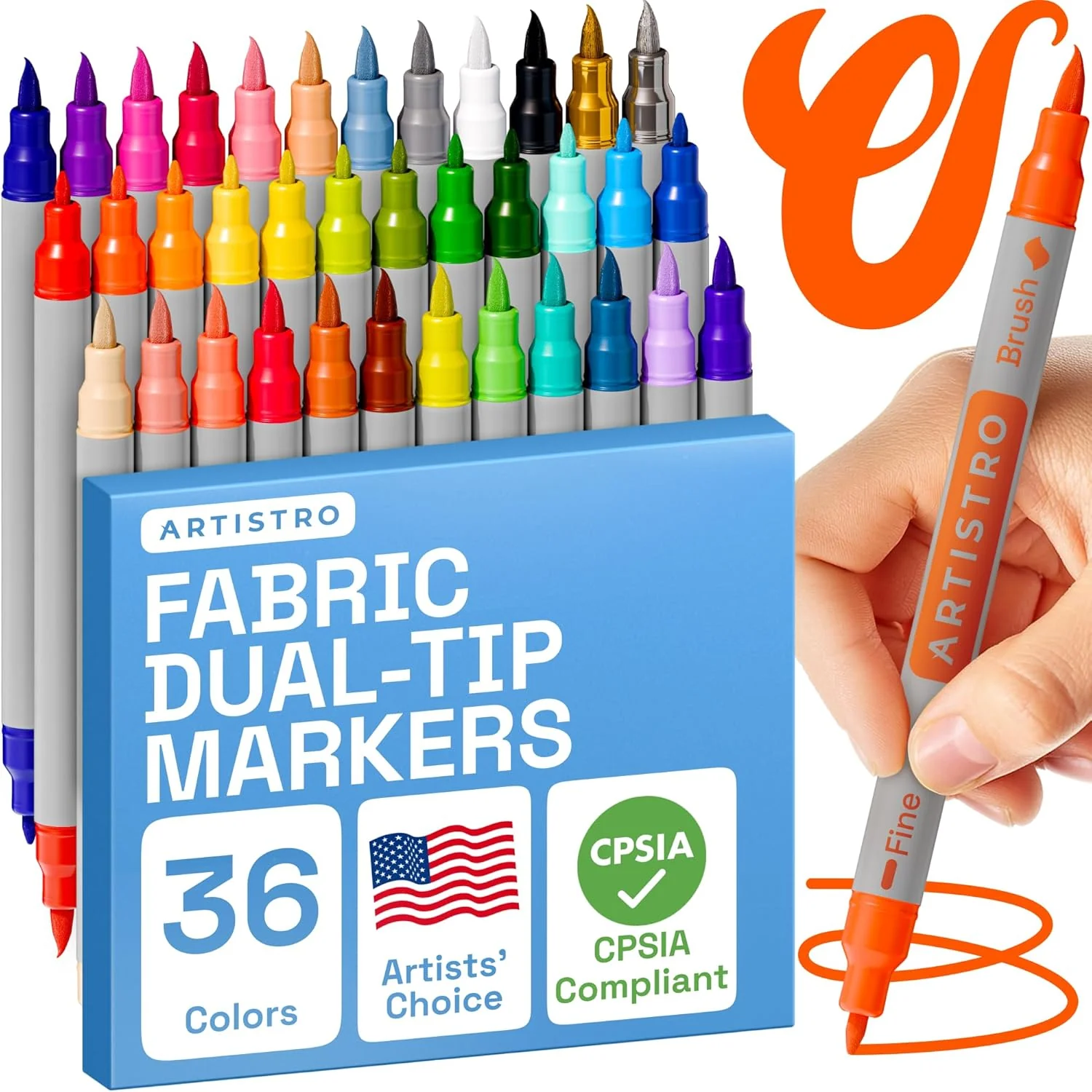
Professional-grade dual-tip acrylic paint markers featuring precision 1mm fine point for detailed artwork and 1-5mm dot tip for area filling and bold applications on fabric textiles, rock, glass, wood, paper, ceramic, and canvas surfaces. The water-based non-toxic formulation delivers vibrant permanent colors after heat-setting while maintaining fabric flexibility preventing cracking during wear and washing. These versatile fabric paint pens include complete color spectrum enabling custom designs on clothing, shoes, bags, home textiles, and craft projects with smooth application requiring minimal pressure for consistent paint flow. Ideal for personalizing t-shirts, customizing sneakers, creating unique gifts, and adding artistic details to any textile project with professional results suitable for beginners and experienced crafters.
- Dual tips: 1mm fine and 1-5mm dot
- Water-based non-toxic formulation
- Works on multiple surfaces
- Vibrant permanent colors
- Flexible paint prevents cracking
- Smooth controlled application
- Complete color spectrum included
Best Fabrics for Paint Pen Application
Fabric paint pens perform optimally on specific textile types while challenging materials require specialized techniques or alternative approaches. Understanding fabric compatibility prevents frustration and ensures professional results across varied projects.
Ideal Textile Choices
Canvas fabric provides excellent paint pen surfaces with tight weaves supporting precise lines and minimal bleeding. The natural fiber absorption creates strong paint bonds while durable construction withstands repeated wear and laundering maintaining design integrity.
Cotton and cotton blends represent perfect substrates offering optimal absorbency for paint adhesion without excessive spreading. The smooth surface texture enables clean linework and detailed illustrations making cotton t-shirts tote bags and pillowcases popular paint pen canvases.
Denim delivers sturdy surfaces accepting paint markers beautifully particularly medium to heavyweight varieties with minimal stretch content. Jeans jackets and bags provide excellent bases for custom artwork withstanding the rigors of regular use while showcasing vibrant designs.
Challenging Materials
Highly stretchy fabrics containing significant spandex or lycra content pose difficulties as paint may crack when material extends beyond original dimensions. Test small inconspicuous areas before committing to major designs on stretch textiles ensuring acceptable flexibility after heat setting.
Loosely woven materials and heavily textured surfaces cause paint bleeding and uneven coverage compromising design precision. Slippery synthetics like satin require stabilization techniques including temporary spray adhesive or tissue paper backing preventing fabric shifting during application.
Water-resistant or treated fabrics repel paint preventing proper adhesion regardless of heat-setting efforts. Remove fabric treatments through washing before painting or select untreated materials ensuring optimal paint pen performance and permanent design bonding.
Proper Application Techniques
Mastering correct paint pen application ensures clean professional results while preventing common mistakes that compromise design quality. Proper technique combined with appropriate preparation creates lasting artwork showcasing full creative potential.
Surface Preparation
Pre-wash fabrics removing sizing chemicals and fabric softeners that interfere with paint adhesion allowing clean textile fibers to bond directly with paint molecules. Avoid fabric softener in washing and drying preventing residue buildup that creates barriers between paint and fabric.
Place cardboard or plastic barriers between fabric layers preventing paint bleed-through to opposite sides or underlying surfaces. Secure fabric smoothly eliminating wrinkles and folds that create uneven painting surfaces causing inconsistent results and distorted designs.
Test paint pens on fabric scraps verifying color accuracy and absorption characteristics before working on final projects. This practice reveals potential issues including excessive bleeding unexpected color shifts or inadequate coverage allowing technique adjustments before irreversible mistakes.
Application Methods
Prime paint pens before use shaking thoroughly then pressing tips on scrap paper until paint flows consistently. This activation process ensures even color distribution preventing weak starts that compromise design beginnings with insufficient coverage.
Maintain consistent pressure throughout strokes creating uniform line widths and color intensity across entire designs. Work at moderate speeds avoiding rushing that causes skipping or moving too slowly creating excessive paint buildup and potential bleeding.
Allow sections to dry completely before adding adjacent colors preventing unwanted color mixing and maintaining crisp boundaries between design elements. The drying process typically requires 15-30 minutes depending on paint thickness and environmental humidity levels.
Detail Work Strategies
Use light initial strokes establishing design outlines before committing to bold permanent marks allowing adjustments and corrections during early stages. Build color intensity gradually through multiple light layers rather than single heavy applications that risk bleeding and uneven coverage.
Support hands on stable surfaces or additional fabric areas preventing trembling that creates wobbly lines compromising precision work. Take frequent breaks during extended sessions maintaining hand steadiness and preventing fatigue that degrades line quality and detail accuracy.
Heat-Setting for Permanence
Proper heat-setting transforms temporary paint applications into permanent designs surviving countless washing cycles without significant fading or deterioration. This crucial step activates binding polymers creating chemical bonds between paint and textile fibers ensuring lasting results.
Heat-Setting Methods
Iron heat-setting provides most reliable results offering controlled temperature application directly to painted areas. Wait 24 hours after painting allowing complete air drying before applying heat preventing steam damage and paint distortion during setting process.
Place clean parchment paper or pressing cloth over designs protecting both artwork and iron surfaces from direct contact. Set irons to appropriate temperatures for fabric types typically cotton settings around 350°F avoiding steam function that introduces moisture interfering with proper heat activation.
Press firmly for 30-60 seconds per section moving systematically across entire designs ensuring all painted areas receive adequate heat exposure. Avoid sliding motions that may smear or distort designs using lifting and pressing actions that maintain design integrity throughout setting process.
Alternative Setting Options
Dryer heat-setting works for completed projects by tumbling dry items on high heat for 30-40 minutes. This method proves convenient for large items or multiple pieces though less precise than iron application potentially missing specific design areas.
Heat press machines deliver professional results with consistent temperature and pressure distribution across entire surfaces. These specialized tools particularly benefit frequent crafters or small businesses producing multiple custom items requiring reliable uniform heat-setting quality.
Wait 72 hours after heat-setting before first washing allowing complete curing and maximum bond development between paint and fibers. This patience ensures optimal permanence and durability for designs intended to withstand regular laundering and wear.
Creative Applications and Projects
Fabric paint pens enable countless creative possibilities from simple personalization to complex artistic expressions across diverse textile items. Understanding project potential inspires unique applications showcasing individual style and creativity.
Clothing Customization
Personalize t-shirts with custom graphics names or inspirational messages creating one-of-a-kind wardrobe pieces reflecting personal identity. Transform plain garments into statement pieces through strategic design placement including pocket accents sleeve details or full back illustrations.
Customize denim jackets with intricate artwork ranging from delicate floral patterns to bold graphic designs showcasing artistic abilities. Add names initials or meaningful symbols to children’s clothing ensuring easy identification while creating special keepsake items.
Revitalize old garments through creative paint pen applications covering stains transforming outdated styles or simply refreshing worn items with new artistic energy. This sustainable approach extends clothing life while exercising creativity through textile transformation.
Home Décor Projects
Design custom pillowcases featuring coordinated patterns monograms or seasonal themes personalizing bedroom or living spaces. Create matching sets through repeated motifs or develop unique individual designs for eclectic decorating styles.
Personalize kitchen textiles including dish towels napkins and aprons with decorative elements or practical labels identifying purposes or ownership. These functional items become conversation pieces combining utility with artistic expression throughout living spaces.
Transform plain curtains or table runners with border designs strategic accents or overall patterns creating cohesive room aesthetics. Paint pen precision enables intricate details impossible with traditional fabric painting techniques suitable for detailed home décor applications.
Gift Creation Ideas
Create personalized baby items including onesies bibs and blankets featuring names birth dates or custom illustrations making treasured keepsakes for new parents. The permanent nature ensures designs survive countless washings throughout infant and toddler years.
Design custom tote bags with recipient names favorite quotes or meaningful imagery creating practical yet personal gifts suitable for various occasions. These reusable bags serve daily purposes while showcasing thoughtful customization reflecting giver creativity and recipient preferences.
Craft unique holiday ornaments using fabric scraps and paint pen details creating annual traditions through personalized decorations. The combination of fabric ribbon and paint pen artwork produces professional-looking ornaments rivaling commercial options while carrying special sentimental value.
Pro Tip: Always test fabric paint pens on hidden garment areas or fabric scraps before starting projects verifying color appearance bleeding characteristics and heat-setting requirements. This simple precaution prevents disappointing results and wasted materials while building confidence for successful project completion.
Troubleshooting Common Issues
Understanding solutions for typical paint pen problems prevents project frustration and enables quick corrections maintaining creative momentum. Most issues stem from preventable causes addressable through proper technique and preparation adjustments.
Bleeding and Spreading
Excessive paint bleeding indicates overly absorbent fabrics requiring stabilization or fabric treatment preventing paint migration beyond intended boundaries. Apply fabric stiffener or spray starch to problem areas creating temporary barriers controlling paint spread during application.
Reduce paint flow through lighter pen pressure and slower application speeds allowing fabrics to absorb paint gradually without oversaturation. Multiple thin layers produce better results than single heavy applications that overwhelm fabric absorption capabilities causing uncontrolled spreading.
Uneven Color Coverage
Inconsistent coverage results from inadequate pen priming or depleted paint supplies requiring thorough shaking and tip activation before use. Prime pens on scrap paper until paint flows smoothly and consistently before touching project fabrics ensuring even color distribution throughout applications.
Build coverage gradually through multiple passes rather than expecting full opacity from single applications. This layering approach particularly benefits lighter colors on dark fabrics where complete coverage requires patient systematic color building.
Cracking and Peeling
Paint cracking indicates insufficient heat-setting or incompatible fabric choices requiring technique review and material reassessment. Ensure complete heat-setting coverage across all painted areas using appropriate temperatures for specific textile types preventing premature design deterioration.
Avoid excessive paint buildup creating rigid layers prone to cracking when fabrics bend or stretch during normal wear. Thin even coats maintain fabric flexibility while providing adequate color coverage surviving movement and washing without structural failure.
Care and Maintenance
Proper care for both paint pens and finished projects extends useful life while maintaining design quality through repeated use and laundering. Understanding maintenance requirements ensures continued creative enjoyment and lasting project results.
Paint Pen Storage
Store fabric paint pens horizontally preventing paint settling that clogs tips or creates uneven color distribution within marker bodies. Cap pens tightly immediately after use preventing premature drying that renders markers unusable before normal lifespan completion.
Keep markers in cool dry locations away from direct sunlight and extreme temperatures that degrade paint quality and consistency. Organized storage systems using drawer dividers or marker holders facilitate easy selection while protecting tips from damage through accidental drops or crushing.
Clean pen tips regularly with damp cloths removing accumulated dried paint that interferes with smooth application. For stubborn clogs gently remove tips following manufacturer instructions and rinse under warm water before reassembly and continued use.
Washing Painted Textiles
Turn painted garments inside out before washing protecting designs from direct agitation and friction that gradually degrades artwork over time. Use cold or warm water settings avoiding hot temperatures that may soften heat-set bonds weakening paint adhesion to fabric fibers.
Select gentle wash cycles with mild detergents free from harsh chemicals bleaches or fabric softeners that attack paint integrity. Avoid overloading washing machines ensuring painted items move freely without excessive rubbing against other garments causing premature wear.
Air dry painted textiles when possible or use low dryer heat settings minimizing thermal stress on designs. High heat exposure during drying can reactivate and potentially damage heat-set bonds especially during early washings before complete curing occurs.
Safety Considerations
Understanding safety aspects of fabric paint pen usage ensures healthy crafting experiences particularly when children participate in creative activities. Most quality paint markers feature non-toxic formulations suitable for general use with appropriate precautions.
Product Selection
Choose paint pens labeled non-toxic and AP certified indicating toxicologist evaluation confirming safety for intended uses. These designations provide assurance that markers contain no harmful substances in quantities posing health risks during normal application.
Consider age-appropriate products when children participate selecting markers with chunky grips and washable formulations suitable for young crafters. Adult supervision remains essential regardless of product safety ratings ensuring proper usage and preventing accidental ingestion or misuse.
Usage Practices
Maintain adequate ventilation during paint pen use even with non-toxic formulations preventing potential respiratory irritation from accumulated fumes in enclosed spaces. Open windows or work outdoors when possible creating comfortable crafting environments minimizing exposure to paint vapors.
Protect work surfaces with plastic sheeting old newspapers or dedicated craft mats preventing permanent staining from accidental marks or spills. Wear old clothing or craft aprons protecting garments from inevitable paint marks occurring during creative processes.
Wash hands thoroughly after crafting sessions removing paint residue from skin before eating or touching face. Keep paint pens away from mouth avoiding accidental ingestion and store markers securely preventing access by very young children or pets.
Building Your Paint Pen Collection
Strategic paint pen acquisition creates versatile collections supporting diverse projects without unnecessary expense or overwhelming storage requirements. Thoughtful selection based on actual usage patterns optimizes creative capabilities while managing investment costs.
Essential Starter Colors
Begin collections with basic primary colors red yellow and blue enabling color mixing experimentation and broad project coverage. Add black and white markers providing essential contrast and highlighting capabilities expanding creative possibilities without extensive color variety.
Expand gradually into secondary colors and specialty shades based on specific project needs and personal style preferences. This measured approach prevents overwhelming options while ensuring frequently used colors remain readily available for spontaneous creative inspiration.
Complementary Tools
Combine paint pens with fabric stencils creating precise repeated patterns and professional-looking designs requiring minimal artistic skill. Stencils particularly benefit beginners building confidence while producing impressive results encouraging continued creative exploration.
Pair markers with fabric chalk or fabric pencil for preliminary sketching guiding paint application without permanent marks. These marking tools enable design refinement before final paint commitment reducing mistakes and improving overall project outcomes.
Incorporate fabric scissors and fabric clips creating complete crafting setups handling projects from initial cutting through final assembly. Comprehensive tool collections streamline workflows improving efficiency and enjoyment throughout creative processes.
Frequently Asked Questions
Yes fabric paint pens create permanent designs when properly heat-set surviving repeated washing cycles without significant fading or deterioration. The heat-setting process activates binding polymers creating chemical bonds between paint and textile fibers ensuring lasting permanence. Wait 24 hours for complete air drying before heat-setting then iron painted areas through protective parchment paper for 30-60 seconds at appropriate fabric temperatures. After heat-setting wait additional 72 hours before first washing allowing complete curing for maximum durability. Properly set designs withstand machine washing when laundered inside out using cold or warm water gentle cycles and mild detergents maintaining design quality through years of regular use.
Fabric paint pens work on dark fabrics though results vary based on paint opacity and color selection. Opaque formulations specifically designed for dark textiles provide best coverage while standard markers may require multiple coats achieving visible results. White gold silver and bright neon colors show most effectively on dark backgrounds while lighter pastels often disappear requiring excessive layering. Test markers on fabric scraps before starting projects verifying adequate coverage and color visibility. Build opacity gradually through multiple thin layers rather than single heavy applications preventing paint buildup while achieving desired intensity. Some manufacturers offer specialized dark fabric markers formulated with enhanced pigment concentrations specifically for optimal coverage on black navy and other deep colored textiles.
Fix fabric paint pen mistakes immediately while paint remains wet by blotting with paper towels or rinsing under cold running water for larger errors. Use slightly dampened cotton swabs for precise corrections on small mistakes carefully lifting excess paint without spreading. For dried but not heat-set paint apply rubbing alcohol to cotton balls dabbing gently to gradually lift paint or try white vinegar diluted 50/50 with water. Once paint is heat-set removal becomes extremely difficult requiring cover-up strategies including incorporating mistakes into designs adding decorative elements or applying patches over errors. Creative solutions often transform mistakes into design features through additional embellishments layered details or strategic placement of complementary elements making original errors invisible within expanded compositions.
Fabric paint pens work on polyester though results vary based on fabric weave and finish requiring careful technique and testing. Polyester’s synthetic nature makes it less absorbent than natural fibers sometimes causing paint to sit on surface rather than bonding deeply into material. Choose tightly woven polyester fabrics with smooth finishes avoiding heavily textured or water-resistant varieties that repel paint. Pre-wash polyester removing any factory treatments or finishes that interfere with paint adhesion then allow complete drying before painting. Use light even pressure applying thin paint layers that bond better than heavy applications prone to cracking on synthetic materials. Heat-setting requires careful temperature monitoring as polyester melts at lower temperatures than cotton using pressing cloths and testing iron heat on inconspicuous areas before treating main designs.
Fabric paint pens are safe for children when using non-toxic AP certified markers designed specifically for youth crafters with appropriate adult supervision. Most major brands offer child-safe formulations evaluated by toxicologists confirming no harmful substances in quantities posing health risks. Select age-appropriate markers with chunky grips for young children making them easier to control while reducing choking hazards from small parts. Supervise children during use ensuring they don’t place markers in mouths and maintain adequate ventilation even with non-toxic products. Adults should always handle heat-setting processes using irons or dryers keeping children away from hot equipment. Provide protective covering for work surfaces and have children wear old clothes or smocks preventing paint contact with good clothing while facilitating easy cleanup.
Unopened fabric paint pens typically last 2-3 years when stored properly in cool dry locations away from extreme temperatures and direct sunlight. Once opened pens remain usable for 6-12 months depending on usage frequency storage conditions and cap sealing effectiveness. Cap markers immediately after each use preventing premature drying that renders pens unusable before normal lifespan completion. Store horizontally preventing paint settling that clogs tips while maintaining even consistency throughout marker bodies. Signs of expired pens include separated paint inconsistent flow clogged tips resistant to cleaning and unusual odors or color changes. Extend pen life through proper maintenance including regular tip cleaning removing dried paint deposits and periodic shaking ensuring even paint distribution. Quality markers from reputable manufacturers generally last longer than budget options due to superior formulations and better sealed construction preventing premature drying.
Yes you can mix fabric paint pen colors directly on fabric creating custom shades and smooth color transitions through blending techniques. Apply colors adjacent to each other while paint remains wet using clean cotton swabs or small brushes to blend boundaries creating gradient effects. Work quickly as paint dries relatively fast particularly on absorbent fabrics like cotton limiting blending time windows. Layer translucent colors over dried base coats creating depth and dimension without physical mixing or apply dots of multiple colors using stippling techniques that visually blend when viewed from distance. Test color combinations on fabric scraps before final applications ensuring satisfactory results and compatibility between specific marker formulations. Some brands blend more easily than others due to varying paint consistencies and drying speeds requiring experimentation discovering optimal techniques for specific marker selections and desired artistic effects.
Related Resources
- Fabric Stencils – Pattern and design templates
- Painting Set – Complete paint supplies
- Paint Gold – Metallic fabric paint
- Red Paint – Color-specific options
- Fabric Chalk – Design marking tools
- Fabric Pencil – Precision marking
- Fabric Scissors – Cutting tools
- Fabric Clips – Project holders
- Fabric Ribbon – Embellishment supplies
- Canvas Fabric – Ideal paint surfaces
- Markers for Jeans – Denim-specific options
- Marker Grey – Neutral color markers
- Marker Brown – Earth tone options
Transform Textiles with Fabric Paint Pens
Fabric paint pens empower creative expression through accessible precision tools transforming ordinary textiles into personalized artwork showcasing individual style and imagination. The combination of controlled application permanent results and versatile color options enables projects ranging from simple personalization to complex artistic compositions suitable for crafters at all skill levels.
Whether customizing clothing creating unique gifts or exploring textile art possibilities quality paint pens paired with proper techniques deliver professional results that withstand regular use and laundering. Understanding marker selection fabric compatibility and heat-setting requirements ensures maximum creative success and lasting design permanence.
Start your fabric painting journey with quality markers appropriate fabric iron for heat-setting and complementary stencils for guided designs creating comprehensive crafting systems supporting unlimited creative exploration across diverse textile projects producing personalized items reflecting unique artistic vision.