
Fabric Painting for T Shirt: Complete Guide to Techniques and Professional Results
Expert Methods for Transforming Plain Tees into Custom Art Using Fabric Paint
Fabric painting for t-shirts transforms plain garments into personalized wearable art using specialized paints that permanently bond with textile fibers. This accessible craft technique allows anyone to create custom designs ranging from simple text to complex artistic compositions without expensive equipment or professional printing services.
Understanding proper paint selection, surface preparation, and heat-setting methods ensures designs remain vibrant through repeated washing and wearing. The right techniques produce professional results whether creating one-of-a-kind gifts, family matching shirts, or launching custom apparel businesses.
Understanding Fabric Paint for T-Shirts
Fabric paints contain special binders formulated specifically to adhere permanently to textile fibers while maintaining flexibility when dry. Unlike standard acrylic craft paints that crack and peel on fabric, quality fabric paints move with material without breaking or flaking even after multiple washes.
The chemical composition allows paint molecules to penetrate and bond with fabric fibers during drying, creating permanent designs that withstand normal wear and laundering. Proper heat-setting further strengthens this bond by curing the paint into durable, washable artwork that becomes part of the garment.
Types of Fabric Paint
Acrylic fabric paints provide the most versatile option for t-shirt designs offering wide color selections, good coverage, and reliable durability. These water-based formulas clean up easily while wet but become permanent once dried and heat-set properly.
Dimensional paints including puffy and glitter varieties create raised textures adding tactile interest to designs. These specialty formulas work best for details and accents rather than covering large areas where stiffness might reduce comfort.
Spray fabric paints enable gradient effects, stencil work, and even coverage across large surface areas quickly. The aerosol application creates smooth finishes without visible brush strokes ideal for backgrounds and solid color sections.
Paint Quality Considerations
Premium fabric paints maintain pigment intensity through washing without significant fading over time. Quality formulations contain higher concentrations of colorfast pigments that resist breakdown from detergents and UV exposure.
Paint consistency affects application ease with properly formulated products spreading smoothly without excessive thickness or wateriness. Testing paint on scrap fabric reveals flow characteristics and coverage before committing to final designs.
Selecting the Right T-Shirt Material
Cotton fabric accepts fabric paint most successfully providing absorbent natural fibers that hold pigments effectively. The textile structure allows paint to penetrate deeply creating strong bonds that resist peeling and cracking through repeated wear.
Material Performance Differences
Pure cotton shirts deliver optimal painting results with vibrant colors, clean edges, and excellent paint adhesion. The natural fiber composition works synergistically with fabric paint chemistry ensuring designs cure properly during heat-setting.
Cotton-polyester blends accommodate fabric painting though synthetic fiber content may affect paint absorption and vibrancy. Blends containing 50% or more cotton generally perform well while higher polyester percentages require specialty paints designed for synthetic materials.
Polyester and other synthetic fabrics need specific fabric paints formulated for non-natural fibers. Standard fabric paints may not adhere properly to synthetic surfaces without appropriate bonding agents or surface preparation.
Fabric Color Selection
White and light-colored shirts showcase fabric paint colors most accurately without requiring special opaque formulations. Light backgrounds allow true color appearance making design planning straightforward with predictable results.
Dark fabric requires opaque fabric paints specifically designed to show vibrant colors over black or navy backgrounds. Multiple paint coats build color intensity on dark materials though this increases drying time and potential stiffness.
Shuttle Art 18 Color Fabric Paint Set
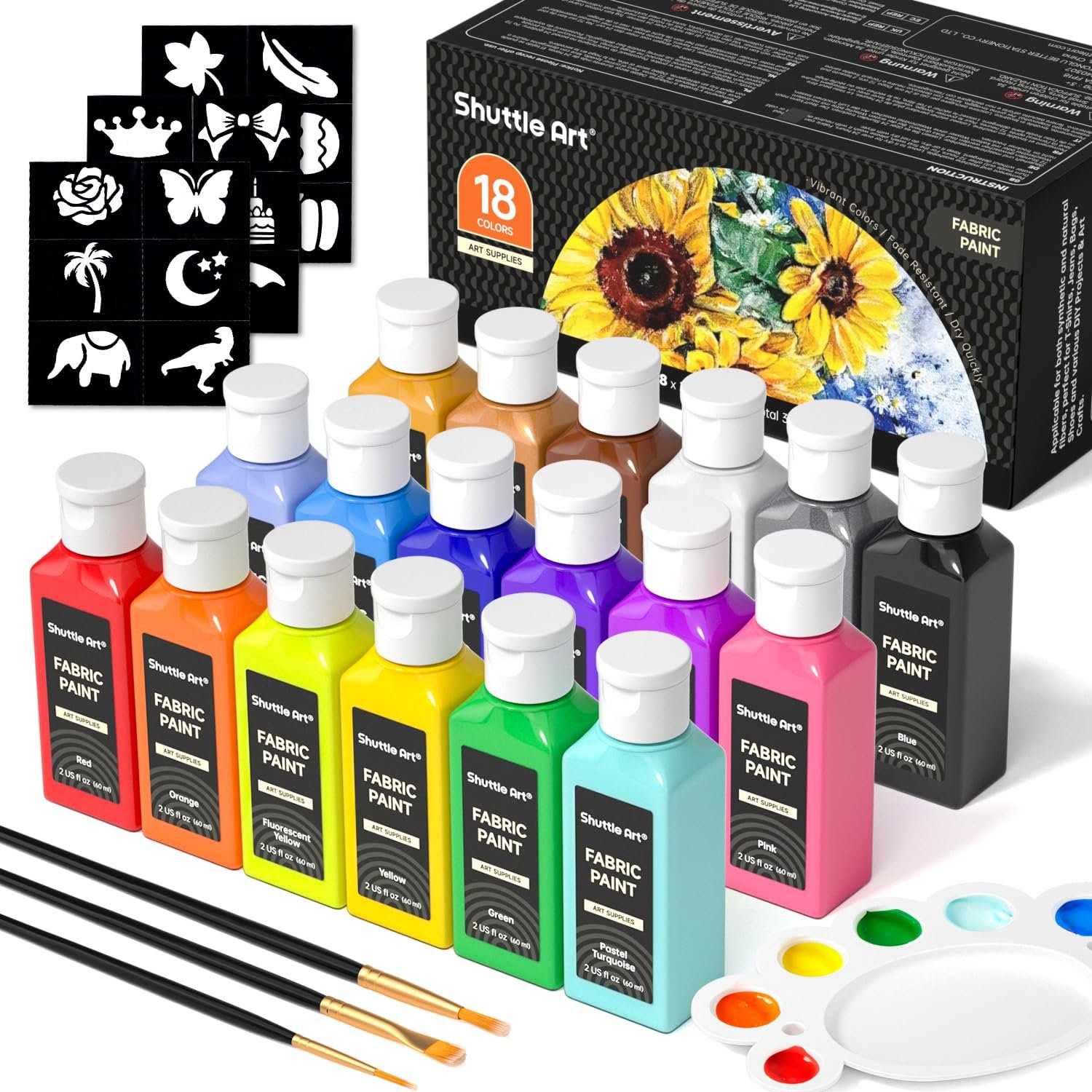
Comprehensive fabric paint kit containing 18 vibrant permanent colors in 60ml bottles with 3 brushes, palette, and 18 pattern stencils perfect for t-shirt painting, shoes, jeans, and DIY textile projects. The non-toxic soft formula maintains flexibility after drying preventing cracking or stiffness while delivering professional results on various fabric types from cotton to denim creating lasting wearable art. Each 2-ounce bottle provides adequate coverage for multiple t-shirt designs while included brushes and stencils eliminate separate supply purchases making this complete starter kit ideal for beginners and experienced fabric painters.
- 18 permanent fabric colors
- 60ml (2oz) bottles each
- Includes 3 quality brushes
- Mixing palette provided
- 18 pattern stencils included
- Non-toxic safe formula
- Soft flexible finish
- Works on multiple fabrics
Essential Tools and Materials
Quality brushes designed for fabric painting provide better control and coverage than general craft brushes. Synthetic bristles work well with water-based fabric paints maintaining shape and resilience through repeated cleaning while natural bristles may deteriorate quickly.
Brush Selection Guide
Detail brushes with fine pointed tips enable precise line work, text, and intricate design elements. Small brushes ranging from size 0 to size 4 handle fine details without excess paint application.
Flat brushes measuring 1/2 to 1 inch width cover larger areas efficiently creating smooth backgrounds and filling substantial design sections. The straight edge creates clean lines for geometric patterns and color blocking.
Foam brushes and sponges produce different textures useful for stippling effects and gradient blending. These tools apply paint with dabbing motions creating dimension and visual interest through texture variation.
Preparation Supplies
Cardboard inserts prevent paint bleeding through shirt fabric to the back side during application. Cut pieces slightly larger than design area ensuring complete coverage underneath work surface.
Marking tools including washable fabric markers or chalk enable design sketching directly on shirts for accurate placement. Light pencil marks work on white fabric though may show through transparent paint layers requiring careful removal.
Preparing T-Shirts for Painting
Pre-washing shirts removes manufacturing sizing chemicals that interfere with paint adhesion creating invisible barriers preventing proper bonding. Wash new shirts without fabric softener which leaves residues that repel water-based paints.
Surface Preparation Steps
Iron shirts thoroughly eliminating wrinkles that cause uneven paint application and potential cracking when fabric shifts during wearing. Smooth fabric surfaces ensure consistent paint thickness and professional appearance across entire design.
Insert cardboard or multiple paper layers inside shirt creating firm painting surface while preventing bleed-through. Secure shirt edges with tape if necessary keeping fabric taut and preventing movement during detailed work.
Sketch designs lightly on fabric using appropriate marking tools ensuring placement accuracy before permanent paint application. Test markers on scrap fabric verifying they wash out completely or remain invisible beneath opaque paint layers.
Work Surface Setup
Protect surrounding areas with plastic sheeting or newspaper preventing accidental paint spills from damaging surfaces. Position shirt at comfortable working height reducing arm strain during extended painting sessions.
Organize paints, brushes, water containers, and paper towels within easy reach before beginning project. Efficient workspace arrangement maintains creative flow without interruptions searching for needed supplies.
Basic Painting Techniques
Applying even paint layers requires proper brush loading with paint coating bristles thoroughly without dripping. Excess paint causes bleeding, extended drying times, and potential fabric stiffness in finished designs.
Solid Color Application
Work in consistent directional strokes maintaining steady pressure across painted areas. Multiple thin coats produce better results than single thick applications allowing proper drying between layers for optimal coverage and flexibility.
Allow adequate drying time between color applications preventing unwanted mixing where different hues meet. Patience during layering creates crisp edges and prevents muddy colors from wet paint bleeding together.
Color Blending Methods
Wet-on-wet blending applies second color while first remains damp creating gradual transitions between hues. Work quickly before paint begins drying using clean damp brush to soften edges where colors meet.
Dry brush blending applies small amounts of paint to nearly dry brush creating textured transitions. This technique builds color gradually through multiple passes producing controlled gradient effects and dimensional shading.
Stencil Techniques
Secure stencils firmly against fabric using temporary adhesive spray or tape preventing shifting during paint application. Movement creates blurred edges and paint seepage ruining crisp stenciled designs.
Use minimal paint on stencil brushes or sponges applying color with dabbing motions perpendicular to fabric surface. Excessive paint causes bleeding under stencil edges while proper technique produces clean sharp outlines.
Pro Tip: Always pre-wash t-shirts before painting to remove sizing chemicals that prevent proper paint adhesion. Skip fabric softener in the wash as it leaves residues that repel water-based paints, and iron shirts smooth before beginning your design for professional results.
Advanced Design Methods
Layering techniques create depth and dimension by building designs through multiple paint applications. Start with background elements allowing complete drying before adding mid-ground details and finishing with foreground focal points.
Creating Texture Effects
Stippling techniques apply paint through repeated dabbing motions creating spotted or grainy textures. Vary pressure and paint density achieving different effects from subtle grain to bold textured patterns.
Dry brushing drags nearly dry paint-loaded brushes across fabric creating streaked weathered effects. This technique adds dimension to designs suggesting highlights, shadows, and surface variation.
Specialty Techniques
Salt creates organic crystalline patterns when sprinkled on wet paint absorbing pigment and leaving lighter spotted areas. Experiment with different salt grain sizes achieving varied texture scales from fine to coarse.
Plastic wrap pressed into wet paint creates crinkled texture patterns as paint dries around wrinkles. Remove wrap carefully after paint sets revealing unique organic designs impossible to achieve through brush application alone.
Heat-Setting Painted Designs
Heat-setting permanently cures fabric paint creating washable designs that withstand repeated laundering. This essential finishing step chemically bonds paint to fabric fibers ensuring designs remain intact through normal garment care.
Proper Heat-Setting Process
Allow painted designs to air dry completely for 24-72 hours before heat-setting depending on paint thickness and humidity levels. Attempting to heat-set damp paint causes smearing and prevents proper curing.
Place clean pressing cloth over dried design protecting both iron and artwork during heat application. Cotton fabric or parchment paper works well preventing direct iron contact that might scorch paint or leave shiny marks.
Apply medium-high iron heat pressing firmly for 3-5 minutes continuously moving iron across entire design area. Maintain consistent pressure and duration ensuring all painted sections receive adequate heat for complete curing.
Alternative Heat-Setting Methods
Clothes dryer heat-setting tumbles painted shirts on high heat for 30 minutes curing paint through sustained elevated temperature. This method works well for larger projects or multiple shirts though lacks precision control of iron pressing.
Check paint manufacturer instructions for specific heat-setting requirements as formulations vary significantly between brands. Some paints require lower temperatures while others need extended heating durations for proper curing.
Preventing Common Problems
Paint bleeding occurs when excess moisture or thin consistency allows pigments to spread beyond intended design boundaries. Using properly concentrated paint with minimal water dilution prevents feathering and maintains crisp edges.
Color Bleeding Solutions
Allow adjacent colors to dry completely before painting neighboring sections preventing wet paint from mixing into muddy unintended hues. Patience between color applications ensures clean separation and maintains design clarity.
Slightly damp brushes work better than wet ones carrying adequate paint without excess water that promotes bleeding. Blot brushes on paper towels after rinsing removing surface moisture before loading with paint.
Fixing Application Mistakes
Remove wet paint immediately by blotting gently with damp paper towels working from outside edges toward center preventing spreading. Rinse affected area under cold water from fabric back side flushing paint before it sets.
Dried paint mistakes require covering with opaque paint layers or incorporating errors into revised designs. Creative problem-solving often transforms accidents into unique design elements enhancing rather than detracting from finished artwork.
Preventing Stiffness
Thin paint layers maintain fabric softness and draping characteristics while thick applications create stiff uncomfortable areas. Multiple light coats achieve full coverage without excess paint buildup that compromises garment wearability.
Fabric medium mixed with acrylic paints improves flexibility reducing stiffness in finished designs. This additive maintains paint adhesion while creating softer hand feel especially important for large painted areas.
Caring for Painted T-Shirts
Proper laundering extends painted shirt lifespan preserving design vibrancy through years of wear. Following recommended care practices prevents premature fading, cracking, or peeling that diminishes artwork quality.
Washing Guidelines
Turn painted shirts inside-out before washing protecting designs from direct agitation and friction against other garments. This simple step significantly reduces wear on painted surfaces during washing cycles.
Use cold water and gentle wash cycles minimizing stress on painted areas while adequately cleaning fabric. Hot water and aggressive washing accelerate paint deterioration shortening design lifespan unnecessarily.
Skip harsh detergents, bleach, and fabric softeners that chemically attack paint bonds or leave residues affecting design appearance. Mild liquid detergents clean effectively without damaging painted artwork.
Drying Recommendations
Air drying painted shirts preserves designs longest by eliminating high heat exposure that can fade colors or affect paint flexibility. Hang shirts away from direct sunlight preventing UV damage to pigments.
Low heat tumble drying offers convenience when necessary though increases wear compared to air drying. Remove shirts promptly when dry avoiding prolonged heat exposure and excessive tumbling friction.
Creative Design Ideas
Personalized text designs showcase names, quotes, or meaningful phrases using various lettering styles from simple block letters to decorative scripts. Stencils ensure consistent letter sizing and alignment for professional-looking typography.
Popular Theme Categories
Nature-inspired designs incorporate botanical elements, landscapes, or wildlife creating wearable art celebrating natural beauty. Simple silhouettes work well for beginners while detailed paintings showcase advanced skills.
Geometric patterns using shapes, lines, and color blocking create modern graphic designs with strong visual impact. These structured compositions suit various skill levels from basic to complex mathematical precision.
Character and pop culture designs personalize shirts with favorite fictional figures, logos, or symbols. Always respect copyright when creating designs for personal use avoiding commercial reproduction of protected intellectual property.
Seasonal Projects
Holiday shirts celebrate special occasions with themed designs from Halloween spookiness to festive winter patterns. Family matching sets create memorable photos and strengthen tradition through coordinated custom apparel.
Event commemoration shirts mark milestones including birthdays, graduations, reunions, or achievements. Custom painted designs create unique keepsakes more meaningful than generic store-bought options.
Working with Different Paint Types
Opaque paints cover dark fabrics effectively showing true colors over black, navy, or deep colored backgrounds. These specialized formulations contain higher pigment concentrations and white bases ensuring visibility without excessive layering.
Metallic and Specialty Paints
Metallic fabric paints add shimmer and dimension creating eye-catching accents that reflect light beautifully. These paints work best for details rather than large areas where sparkle might overwhelm designs.
Glow-in-the-dark paints create designs visible in darkness adding surprise elements to daytime appearances. Charge painted areas under bright light before displaying in dark environments for maximum luminescence.
Neon and fluorescent paints deliver intense vibrant colors particularly striking under black light conditions. These specialty formulas create bold statements perfect for party shirts and artistic expression.
Paint Mixing Techniques
Custom color creation expands limited palette options mixing primary colors achieving desired hues unavailable in standard sets. Test mixed colors on scrap fabric ensuring satisfaction before committing to final designs.
Lightening colors with white paint or darkening with black creates value variations adding depth and dimension. Gradual mixing produces subtle tonal shifts while dramatic ratios yield bold contrast.
Frequently Asked Questions
Acrylic fabric paint specifically formulated for textiles provides optimal results combining vibrant colors, good coverage, and wash durability. These paints contain special binders that bond permanently with fabric fibers while maintaining flexibility preventing cracking or peeling through repeated wearing and washing. Quality brands offer wide color selections and consistent performance making them suitable for everything from simple designs to complex artistic compositions on cotton and cotton-blend shirts.
Pre-wash shirts without fabric softener to remove manufacturing sizing chemicals that prevent paint adhesion, then iron thoroughly eliminating wrinkles for smooth painting surface. Insert cardboard inside shirt preventing paint bleed-through to back side while creating firm work surface. Sketch design lightly using washable fabric markers or chalk ensuring proper placement before applying permanent paint. This preparation creates optimal conditions for professional results with clean lines and lasting adhesion.
Yes, properly painted and heat-set t-shirts withstand normal washing when cared for correctly using cold water, gentle cycles, and mild detergent. Turn shirts inside-out before washing protecting painted designs from direct agitation, and avoid harsh chemicals including bleach and fabric softener that damage paint bonds. Wait at least 72 hours after painting for complete curing before first wash, then air dry or use low heat tumble drying to maximize design longevity through years of wear.
Surface drying occurs within 1-4 hours depending on paint thickness, humidity levels, and air circulation, while complete curing requires 24-72 hours before heat-setting. Thin paint layers dry faster than thick applications, and low humidity environments accelerate drying compared to damp conditions. Never heat-set designs until paint feels completely dry to touch throughout all painted areas preventing smearing or incomplete curing that compromises durability and washability of finished artwork.
Yes, heat-setting permanently cures fabric paint creating washable designs that withstand repeated laundering without fading or peeling. This essential step chemically bonds paint molecules to fabric fibers through sustained elevated temperature applied via iron pressing or tumble drying. Skip heat-setting and designs may wash out partially or completely during first laundering, while proper heat-setting ensures painted artwork becomes permanent part of garment lasting through normal wear and care.
Regular acrylic craft paint lacks flexibility needed for fabric applications causing cracking and peeling when garments bend or stretch during wearing and washing. While mixing acrylic paint with fabric medium improves flexibility and adhesion, results rarely match quality fabric paints specifically formulated for textiles. Fabric paints contain specialized binders designed to move with fabric fibers maintaining integrity through repeated stress, making them superior choice for durable wearable designs that last.
Use properly concentrated fabric paint without excessive water dilution, and work with slightly damp rather than wet brushes carrying adequate paint without excess moisture. Allow painted sections to dry completely before applying adjacent colors preventing wet paint from mixing, and apply paint in thin controlled layers rather than thick applications prone to spreading. Secure stencils firmly against fabric when used, and consider fabric medium additives that improve paint control while maintaining proper consistency for clean crisp edges.
Transform Plain Shirts into Custom Art
Fabric painting for t-shirts offers accessible creative expression transforming basic garments into personalized wearable art showcasing individual style and artistic vision. The combination of proper paint selection, thorough preparation, and correct technique produces professional results rivaling commercial printed designs while maintaining handcrafted character impossible to replicate through mass production.
Whether creating unique gifts, family matching outfits, or launching custom apparel ventures, mastering fabric painting techniques opens endless creative possibilities. The skills develop progressively from simple solid color designs to complex multi-layered compositions as confidence and experience grow through practice.
Start your fabric painting journey with quality materials and patient technique development, allowing creativity to flourish through this rewarding craft that combines artistic expression with practical wearable results.