
Fabric Spray Paint: Complete Guide to Colors, Techniques, and Best Uses for Every Project
Non-Toxic, Permanent, and Washable Spray Paint for Clothing, Furniture, Upholstery, and Creative Textile Projects
Fabric spray paint provides versatile color transformation for textiles ranging from clothing and accessories to upholstered furniture and home décor items through specialized formulas that penetrate fibers instead of creating stiff surface coatings. These aerosol paints bond with fabric structures maintaining flexibility and breathability while delivering permanent vibrant colors that withstand washing and regular use.
Understanding how fabric spray paint differs from regular spray paint and selecting appropriate formulations for specific materials ensures professional results on everything from cotton t-shirts to synthetic upholstery. The accessible application method makes textile customization achievable without specialized equipment or extensive artistic skills.
How Fabric Spray Paint Works
Fabric spray paint contains specialized binding agents designed to penetrate between textile fibers carrying pigments deep into fabric structures rather than sitting on surfaces. These molecular bonds integrate with fibers allowing painted textiles to flex and move naturally without cracking or peeling that occurs when regular paint is applied to fabric.
The carrier fluid evaporates after application leaving binding agents and colorants permanently attached to individual fibers. This integration preserves fabric characteristics including drape, texture, and breathability while adding durable color that becomes part of the textile itself.
Binding Technologies
Acrylic-based fabric spray paints form flexible polymer networks offering excellent wash resistance and color retention on most natural fibers. These versatile formulations work well for general applications including clothing, home textiles, and craft projects requiring durability.
Water-based options provide eco-friendly alternatives with lower chemical content though they may require heat-setting for maximum permanence. Specialized synthetic-fiber formulations address adhesion challenges on polyester and nylon using binding agents specifically designed for non-porous surfaces.
Permanence Factors
Quality fabric spray paints labeled permanent provide long-lasting results when properly applied and cured according to manufacturer instructions. Heat-setting activates chemical bonds in many formulations ensuring colors withstand multiple wash cycles without significant fading or bleeding.
Permanence depends on proper surface preparation, adequate curing time, appropriate application technique, and suitable aftercare practices. Even premium permanent formulas experience gradual fading over years similar to commercially dyed fabrics.
Choosing Fabric Spray Paint Types
Different project requirements demand specific fabric spray paint characteristics including opacity level, flexibility rating, and compatibility with various textile types. Understanding these distinctions prevents disappointing results from using inappropriate formulations.
Paint Opacity Options
Standard fabric spray paints work beautifully on light-colored backgrounds but appear translucent or change color dramatically on dark fabrics. These semi-transparent formulations allow layering techniques for gradient effects and color blending.
High-opacity formulas designed specifically for dark fabrics contain increased pigment loads enabling vibrant colors to show clearly on black, navy, or deep-colored textiles. These specialized paints typically require fewer coats achieving full coverage compared to standard options on dark backgrounds.
Flexibility Ratings
Soft-hand fabric paints maintain exceptional flexibility making them ideal for clothing and wearable items that experience constant movement and stretching. These formulations preserve fabric comfort without creating stiff painted areas that crack during wear.
Medium-flexibility options suit decorative items and home textiles that move occasionally but don’t require extreme bendability. Heavy-duty formulations prioritize durability and coverage for furniture applications where slight stiffness proves acceptable.
Special Formulations
UV-resistant fabric spray paints contain protective additives preventing premature fading on outdoor items exposed to direct sunlight. Weather-resistant options withstand moisture and temperature variations making them suitable for patio cushions, banners, and exterior textiles.
Non-toxic formulations prioritize safety for children’s projects and items contacting skin directly. Metallic and neon specialty paints expand creative possibilities beyond standard color palettes for decorative applications.
Tulip Fabric Spray Paint Rainbow 9 Pack
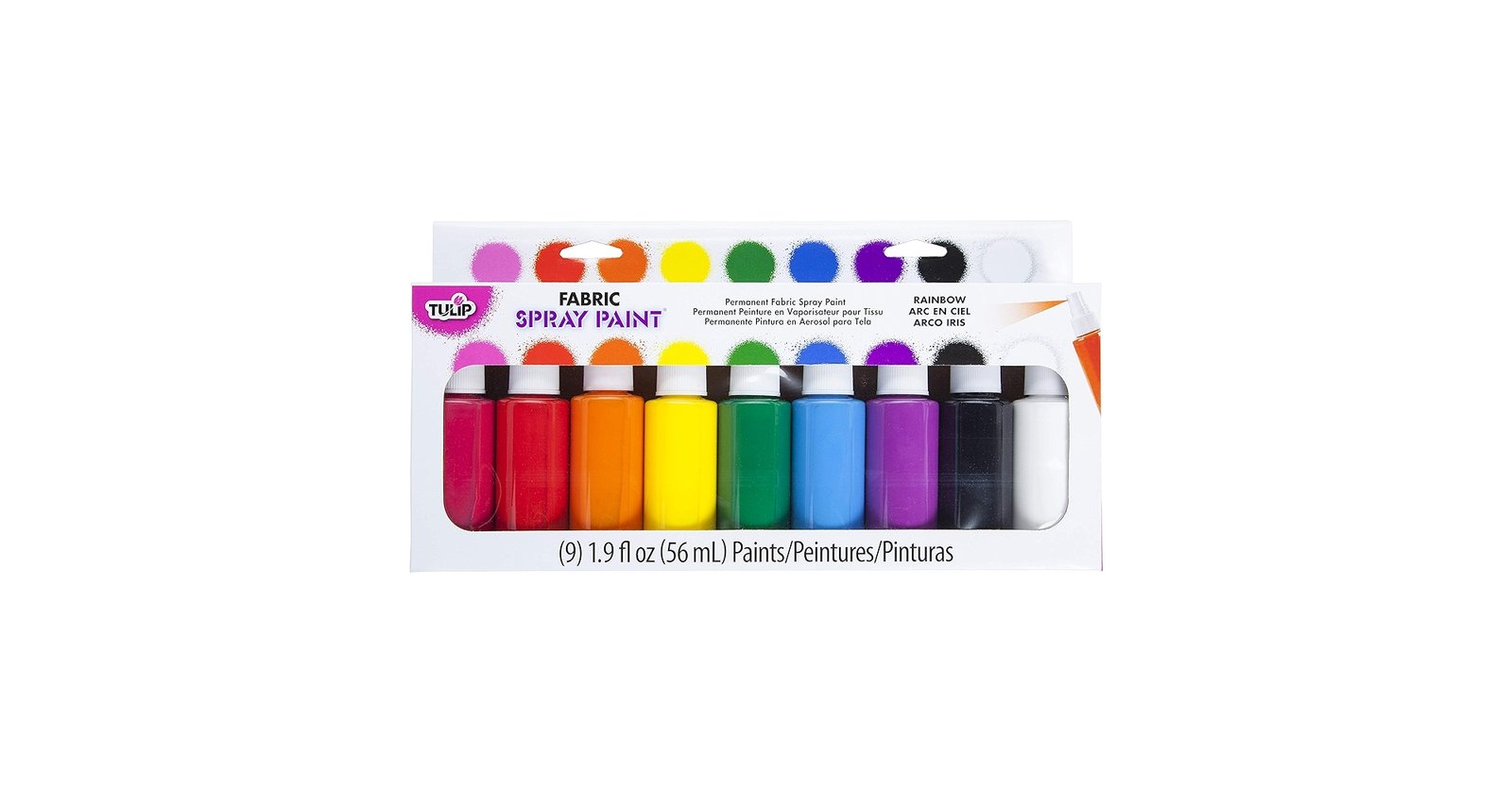
Non-aerosol fabric spray paint kit featuring pump nozzle control for achieving fine mist or splatter effects across nine vibrant colors including pink, red, orange, yellow, green, blue, purple, black, and white in 1.9 fl oz bottles. The controlled spray mechanism allows precise application avoiding excessive overspray while maintaining complete artistic control over coverage density and pattern creation. This versatile rainbow collection provides essential colors for mixing custom shades and completing diverse projects from clothing customization to home décor transformation with professional permanent results.
- Non-aerosol pump nozzle
- 9 vibrant rainbow colors
- 1.9 fl oz per bottle
- Fine mist to splatter control
- Complete color mixing range
- Permanent fabric formula
- Ideal for clothing and crafts
Tulip ColorShot Festival 5 Pack
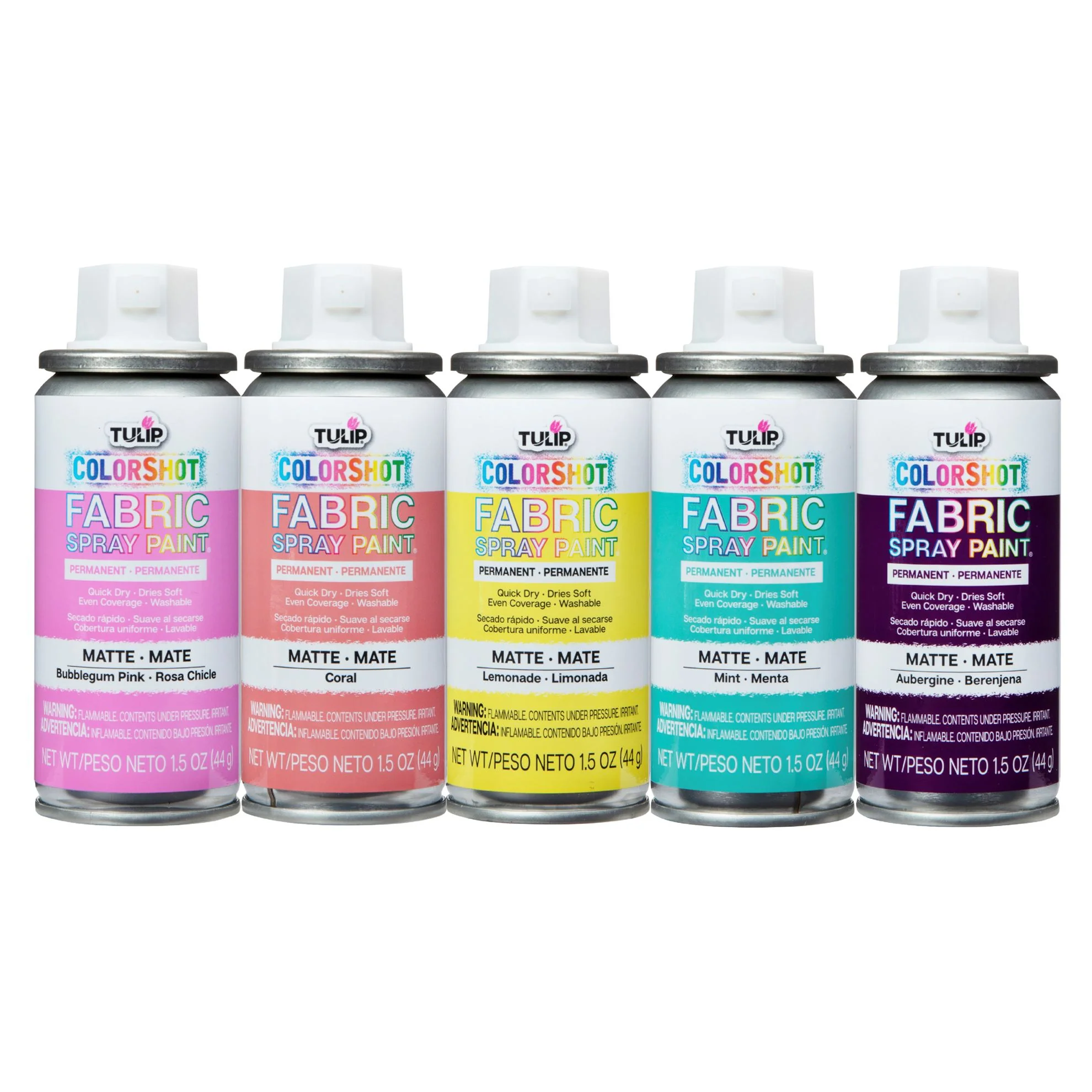
Aerosol fabric spray paint festival pack featuring five coordinating colors in convenient 1.5 oz spray cans perfect for natural and synthetic fabric applications with quick-drying soft-touch finish. The even coverage formula prevents drips and splatters delivering professional results whether applying allover color or working with stencils for detailed designs. This versatile aerosol system works beautifully across various fabric types allowing colors to blend seamlessly on textiles creating custom shades and gradient effects for clothing, home décor, and creative projects.
- Aerosol spray formula
- 5 coordinating colors per pack
- 1.5 oz convenient cans
- Works on natural and synthetic fabrics
- Quick-drying soft finish
- Even coverage without drips
- Colors blend on fabric
- Perfect for stenciling
Working with Different Fabric Types
Natural fiber fabrics including cotton, linen, and canvas accept fabric spray paint most successfully due to porous structures allowing deep pigment penetration. These materials provide ideal surfaces for beginners learning application techniques.
Natural Fiber Applications
Cotton textiles bond exceptionally well with fabric spray paint producing vibrant lasting colors through simple application and heat-setting processes. The absorbent nature ensures paint integrates thoroughly creating professional results with minimal special preparation.
Linen and canvas fabrics handle spray paint beautifully though their textured surfaces may require slightly more product for even coverage. These sturdy natural fibers support heavy paint applications without sagging or distortion.
Synthetic Material Challenges
Polyester and nylon fabrics resist paint adhesion due to smooth non-porous surfaces requiring specialized formulations or additional surface preparation. Light sanding with fine-grit sandpaper improves paint grip though this technique suits only certain synthetic types.
Cleaning synthetic fabrics thoroughly before painting removes factory finishes and surface treatments that prevent proper bonding. Synthetic-specific fabric spray paints contain modified binders addressing adhesion challenges these materials present.
Blended Fabric Performance
Cotton-polyester blends and other mixed-fiber textiles typically accept fabric spray paint well with natural fiber content anchoring paint bonds. Higher natural fiber percentages generally produce better adhesion and color retention through washing.
Stretchy fabrics containing spandex or elastane require flexible paint formulations and application while fabric is slightly stretched preventing cracking during wear. Test spray painted stretch fabrics before final application ensuring paint moves appropriately with material.
Proper Application Techniques
Successful fabric spray painting depends on proper technique including appropriate distance, consistent movement, and adequate drying between coats. Mastering basic application skills produces professional results avoiding common mistakes like drips and uneven coverage.
Distance and Coverage
Maintain 6-8 inches distance between spray nozzle and fabric surface ensuring even mist distribution without concentrated wet spots. Closer spraying increases drip risk while excessive distance wastes paint and produces dusty inconsistent coverage.
Apply thin multiple coats rather than single heavy applications building color gradually with thorough drying between layers. This technique prevents fabric saturation that causes stiffness and ensures even color without blotchiness.
Movement Patterns
Move spray can steadily across fabric using smooth continuous motion rather than stopping and starting over specific areas. Consistent movement speed prevents darker patches where spray concentrates during pauses.
Overlap each pass slightly ensuring complete coverage without visible lines between strokes. Practice spray patterns on cardboard before working on actual projects developing muscle memory for even application.
Layering for Opacity
Allow each coat to dry completely before adding subsequent layers following manufacturer recommendations for drying time between applications. Rushing this process causes colors to mix unexpectedly and prevents proper bonding.
Evaluate coverage after each dried coat deciding whether additional layers are necessary for desired opacity. Dark fabrics typically require more coats than light backgrounds achieving full color saturation.
Design Creation Methods
Fabric spray paint enables countless design possibilities from precise patterns using stencils to freehand artistic effects through various application techniques. Understanding different approaches expands creative options beyond simple color changes.
Stencil Applications
Secure stencils firmly against fabric using temporary adhesive spray or weights preventing paint bleeding underneath edges. Position stencils carefully before spraying checking alignment and spacing particularly for repeating patterns.
Apply light coats through stencil openings building color gradually rather than saturating fabric in single application. Remove stencils while paint remains slightly damp preventing dried paint from pulling away with template.
Masking Techniques
Use painter’s tape for crisp straight lines and geometric designs positioning carefully on fabric surface. Press tape edges firmly ensuring complete adhesion preventing paint seepage underneath.
Create custom masks using contact paper or freezer paper for complex shapes cutting designs precisely with sharp blades. Freezer paper iron-adheres temporarily to fabric providing excellent edge definition for detailed work.
Gradient Effects
Begin spraying beyond fabric edge moving steadily across surface for smooth color transitions. Gradually increase distance from fabric for lighter application creating ombré effects blending multiple colors seamlessly.
Layer different colors while still wet allowing pigments to merge naturally on fabric. This wet-blending technique produces unique color variations impossible to achieve through separate dried layers.
Pro Tip: Always wash new fabrics before spray painting to remove manufacturing chemicals and sizing that prevent proper paint adhesion. This crucial preparation step ensures maximum color permanence and even coverage across entire surface.
Surface Preparation Requirements
Proper fabric preparation proves essential for professional results with spray paint determining adhesion quality and final appearance. Investing time in thorough preparation prevents disappointing outcomes requiring project rework.
Cleaning Procedures
Wash fabrics thoroughly using mild detergent removing oils, dirt, and manufacturing finishes that interfere with paint bonding. Allow complete drying before painting as moisture prevents proper pigment penetration and adhesion.
Clean previously used items carefully eliminating all residues including fabric softener buildup and body oils. These invisible barriers dramatically reduce paint permanence causing premature fading and peeling.
Surface Treatment
Iron fabrics smooth before painting eliminating wrinkles that cause uneven coverage and pattern distortion. Flat wrinkle-free surfaces accept spray paint uniformly producing professional appearance.
Insert cardboard or plastic barriers inside garments preventing paint bleeding through to back layers. Secure fabric taut when possible maintaining flat painting surface without buckles or folds.
Work Area Setup
Protect work surfaces completely using drop cloths or plastic sheeting as overspray travels farther than expected. Work in well-ventilated areas preferably outdoors preventing harmful fume accumulation.
Position projects at comfortable working height allowing easy movement around all sides. Adequate lighting reveals coverage inconsistencies during application enabling immediate correction.
Heat-Setting and Curing
Many fabric spray paints require heat-setting to activate permanent chemical bonds ensuring washability and long-term durability. Understanding proper curing procedures maximizes paint performance and longevity.
Heat-Setting Methods
Iron painted fabrics on reverse side using temperature appropriate for base material once paint feels completely dry to touch. Place parchment paper between iron and fabric protecting both surfaces during heat application.
Tumble dry items on high heat for 30-45 minutes as alternative heat-setting method following paint manufacturer recommendations. This approach proves convenient for large items difficult to iron thoroughly.
Curing Time
Allow painted items to cure undisturbed for 24-72 hours after heat-setting before wearing or washing. Complete curing permits full chemical bonding strengthening paint adhesion to maximum levels.
Extend curing time in humid conditions or for thick paint applications ensuring complete carrier evaporation. Rushing curing process compromises permanence causing premature wear and fading.
Washing and Maintenance
Properly cured fabric spray paint withstands regular washing when appropriate care practices are followed. Understanding correct laundering techniques extends painted textile lifespan significantly.
Washing Guidelines
Turn spray-painted items inside-out before washing protecting decorated surfaces from direct agitation and friction. Use cold water on gentle cycles with mild detergent avoiding harsh chemicals that degrade paint bonds.
Skip fabric softeners and bleach when laundering painted textiles as these products break down paint adhesion accelerating fading. Air-dry painted items when possible or use low dryer heat preventing thermal damage.
Long-Term Care
Iron spray-painted fabrics on reverse side only if pressing becomes necessary avoiding direct heat contact with decorated surfaces. Store painted textiles away from direct sunlight preventing UV-induced fading.
Inspect painted areas periodically for signs of wear or fading addressing issues promptly with touch-up applications. Proper ongoing care maintains appearance through years of use and washing.
Furniture and Upholstery Applications
Fabric spray paint transforms tired upholstered furniture into contemporary statement pieces at fraction of reupholstering costs. This dramatic application requires specific techniques addressing large surface areas and varied textures.
Furniture Preparation
Vacuum upholstery thoroughly removing dust, pet hair, and loose particles that interfere with paint adhesion. Clean deeply with upholstery cleaner eliminating oils and stains allowing complete drying before painting.
Test spray paint on furniture underside or hidden area verifying color and coverage before treating visible surfaces. This precaution prevents discovering compatibility issues after painting prominent areas.
Application Strategy
Apply very light coats to upholstery building color gradually across multiple thin layers maintaining fabric texture. Heavy applications create stiff uncomfortable surfaces defeating the purpose of fabric-specific paint.
Work systematically across furniture piece ensuring even coverage without missing areas or creating darker patches. Large projects require significantly more paint than expected so purchase adequate supply before beginning.
Protective Finishing
Apply fabric protector spray after paint fully cures creating stain-resistant barrier for furniture receiving regular use. This protective layer extends painted upholstery lifespan while easing ongoing maintenance.
Common Application Problems
Understanding frequent fabric spray paint challenges and their solutions prevents frustration and project failure. Most issues have straightforward remedies when addressed promptly.
Drips and Runs
Dripping occurs from spraying too close to fabric or applying excessive paint in single coat. Maintain proper distance and use light applications preventing saturation that causes paint to run.
Blot fresh drips immediately with paper towel preventing permanent marks. For dried drips, carefully scrape away excess and reapply light coats blending repaired area with surrounding surface.
Uneven Coverage
Blotchy results indicate inconsistent spray distance or movement speed during application. Practice maintaining steady hand motion and consistent positioning developing muscle memory for even coverage.
Apply additional light coats to sparse areas building opacity gradually. Avoid heavy spot applications attempting to correct light areas as this creates obvious patches.
Color Bleeding
Paint bleeding through fabric indicates inadequate barrier protection or excessive paint application. Always insert cardboard or plastic inside garments and use lighter coats preventing saturation.
Insufficient drying time between coats also causes bleeding as wet layers merge traveling through fabric layers. Follow manufacturer drying recommendations religiously.
Frequently Asked Questions
Quality fabric spray paints become permanent after proper application and heat-setting, withstanding regular washing when care instructions are followed. The paint bonds chemically with fabric fibers rather than creating surface coating that washes away. Wash spray-painted items inside-out in cold water on gentle cycles using mild detergent, avoiding bleach and fabric softeners that degrade paint bonds. Air-dry or use low heat settings for maximum longevity. Expect gradual fading over years similar to commercially dyed fabrics, with proper care extending vibrancy significantly.
Regular spray paint creates stiff uncomfortable coating on fabric that cracks when bent and deteriorates quickly through washing, making it unsuitable for most textile applications. Fabric-specific spray paint formulas penetrate fibers maintaining flexibility and breathability while forming permanent washable bonds. Regular spray paint may work for purely decorative non-wearable items or when intentionally creating stiffened sculptural effects. For clothing, upholstery, or any flexible textile application, always use proper fabric spray paint ensuring comfort and durability through use.
Natural fiber fabrics including cotton, linen, and canvas accept spray paint most successfully due to porous absorbent structures allowing deep pigment penetration and strong bonding. These materials require minimal special preparation producing excellent results for beginners. Cotton-polyester blends work well with higher natural fiber content improving paint adhesion. Synthetic fabrics like polyester and nylon require specialized formulations or surface preparation for adequate bonding. Avoid heavily textured pile fabrics and waterproof materials without appropriate primers, as these resist standard fabric spray paint adhesion.
Use fabric spray paints specifically formulated for dark fabrics containing higher pigment loads enabling vibrant colors to show clearly on black or navy backgrounds. Standard spray paints appear translucent or change color dramatically on dark textiles requiring numerous coats for visibility. Apply thin layers of dark-fabric formula allowing complete drying between coats building opacity gradually. Test on fabric scrap first verifying coverage and color accuracy. Consider white base coat under bright colors for maximum vibrancy though this adds extra steps. Dark-fabric formulations typically achieve full coverage in 2-3 light coats.
Heat-setting serves as primary sealing method for most fabric spray paints, activating permanent chemical bonds ensuring washability without additional sealants. Iron painted fabric on reverse side or tumble dry on high heat following manufacturer specifications. For extra protection on high-use items, apply fabric sealant spray after paint fully cures creating invisible barrier against abrasion. Decorative items not requiring washing may skip heat-setting though sealed pieces resist handling wear better. Outdoor applications benefit from UV-protectant sprays preventing premature sun-induced fading extending color vibrancy.
Fresh wet fabric spray paint removes relatively easily by blotting with paper towels and flushing fabric from back side with cold water and dish soap. Dried paint proves increasingly difficult to remove with isopropyl alcohol working on some formulations when applied promptly to mistakes. After heat-setting, fabric spray paint forms permanent bonds resisting all removal attempts in most cases. Test removal methods on hidden areas first preventing damage to base fabric. For heat-set mistakes, consider incorporating errors into new designs or covering with appliqué rather than attempting complete removal which may damage fabric irreparably.
Fabric spray paint typically dries to touch within 15 minutes to 2 hours depending on brand, application thickness, and environmental conditions though complete curing requires 24-72 hours. Allow each coat to dry completely before adding subsequent layers preventing colors from mixing unexpectedly. Heat-set painted items only after paint feels completely dry ensuring carrier fluids have evaporated fully. Wait full curing period before washing or wearing painted textiles permitting maximum chemical bonding strength. Humid conditions or thick applications require extended drying and curing times for optimal permanence and durability through use.
Transform Textiles with Permanent Color
Fabric spray paint offers accessible method for transforming clothing, furniture, and home textiles through permanent vibrant colors that maintain fabric flexibility and breathability. The specialized formulations bond chemically with fibers producing washable results impossible to achieve with regular spray paint or surface treatments.
Whether refreshing faded upholstery, customizing clothing, or creating unique decorative textiles, proper paint selection and application technique ensure professional durable results. Understanding fabric compatibility, preparation requirements, and curing processes maximizes spray paint performance and longevity.
Start your textile transformation projects with quality fabric spray paint, proper surface preparation, and patient application technique creating custom pieces showcasing personal style and creative vision.